Jun 7, 2026
What Causes ADHD? Genetics, Brain Chemistry, and the Latest Research (June 2026)
Written by:

Charlotte Coates
TLDR:
Genetics account for roughly 74% of ADHD risk, with hundreds of gene variants affecting dopamine and norepinephrine signaling.
ADHD involves measurable brain differences in the prefrontal cortex, basal ganglia, and dopamine transmission.
Prenatal exposures like tobacco smoke and lead can raise ADHD risk when combined with genetic predisposition.
Sugar, screen time, parenting style, and vaccines do not cause ADHD, despite persistent myths.
Legion Health connects Texas adults with board-certified psychiatric providers for ADHD evaluations via telehealth.
Everyone talks about ADHD genetics, but genetics alone don't tell you what causes ADHD in your specific situation. The real answer involves gene variants that affect dopamine and norepinephrine, structural differences in your prefrontal cortex and basal ganglia, and environmental exposures before or right after birth. ADHD causes are more like a recipe with multiple ingredients than a single inherited factor. We're going to break down how genetics, brain chemistry, and environment each contribute to ADHD, and what the latest research actually shows about how they work together.
The genetic foundation of ADHD
ADHD runs in families more reliably than almost any other psychiatric condition. Twin and family studies suggest genetics account for roughly 74% of ADHD trait variation, placing it among the most heritable conditions in psychiatry.
The inheritance pattern is not simple, though. Instead of one gene being responsible, large-scale genome-wide association studies have identified hundreds of common genetic variants that each contribute a small amount of risk. No single variant causes ADHD on its own.
Genes most often implicated
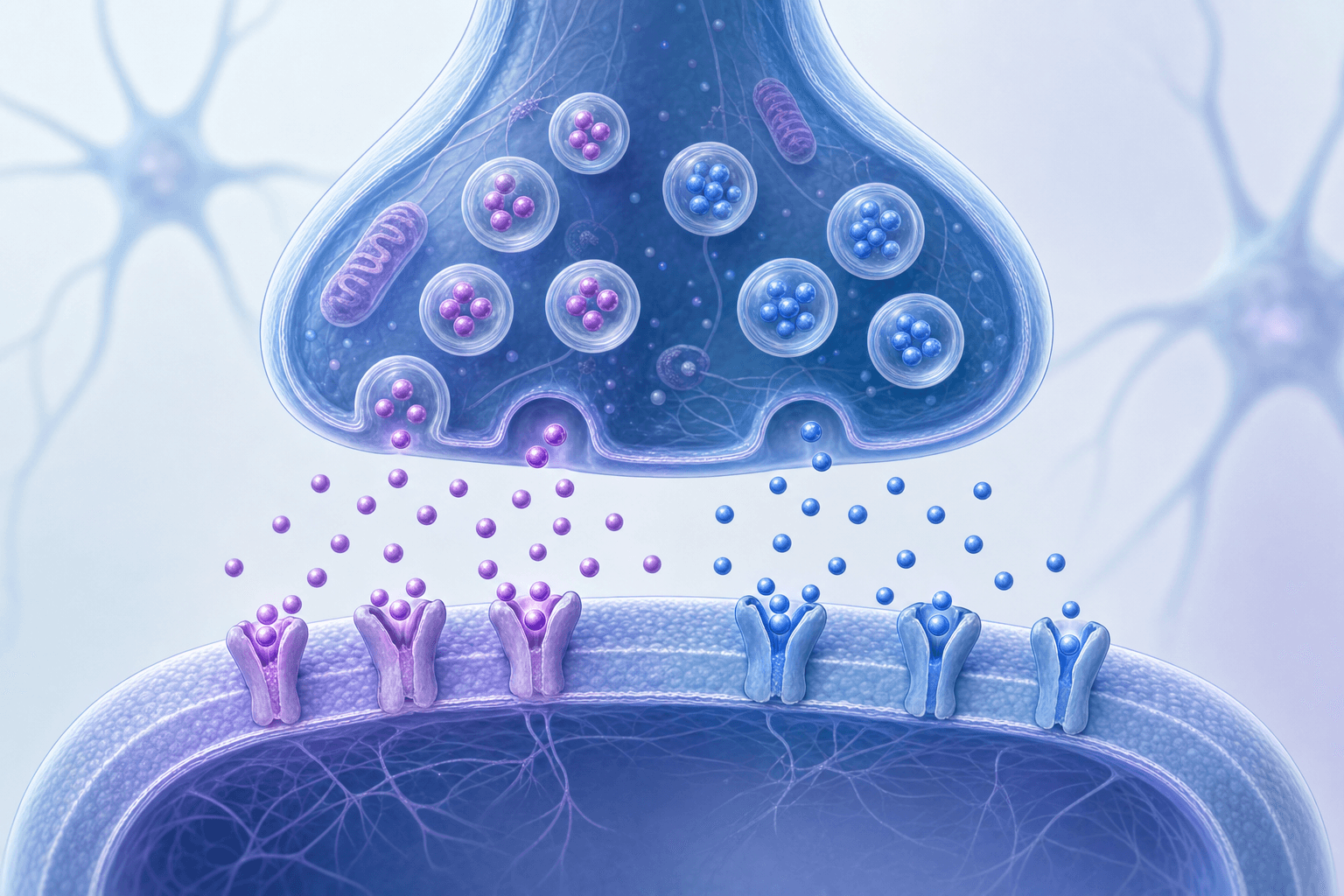
Research has consistently pointed to variants in genes tied to dopamine and norepinephrine signaling, two neurotransmitter systems that govern attention, motivation, and impulse control:
Variants in dopamine receptor genes like DRD4 and DRD5 affect how the brain responds to dopamine, making it harder to maintain attention and filter distractions.
The dopamine transporter gene DAT1 influences the rate of dopamine clearance from synapses, thereby affecting the strength and duration of dopamine signals.
SNAP25, a gene involved in neurotransmitter release, has been linked to ADHD in multiple studies across different populations.
These findings do not mean genetics is destiny. Having a parent with ADHD raises a child's risk meaningfully, but environmental factors still shape whether and how those traits show up.
Brain chemistry and neurotransmitter differences
ADHD involves real, measurable differences in how the brain manages attention, impulse control, and motivation. These differences are most evident in the dopamine and norepinephrine systems.
Dopamine helps the brain signal reward and organize tasks. In people with ADHD, dopamine transmission in the prefrontal cortex tends to be less efficient, which makes it harder to maintain focus on tasks that don't offer immediate feedback. Norepinephrine works alongside dopamine to support working memory and the ability to filter out distractions.
How does this connect to symptoms?
These aren't character flaws or a lack of effort. When dopamine signaling is weaker, the brain may seek stimulation elsewhere, which can manifest as restlessness, task-switching, or difficulty completing low-reward work.
This is also why stimulant medications can help. They increase the availability of dopamine and norepinephrine in the prefrontal cortex, which can improve focus and impulse control for many people. That said, medication response varies, and not everyone with ADHD responds the same way.
Structural and functional brain differences
Brain imaging and neuroscience research have added another layer to our understanding of ADHD causes. People with ADHD show consistent structural and functional differences in several brain regions compared to those without the condition.
Key brain regions involved
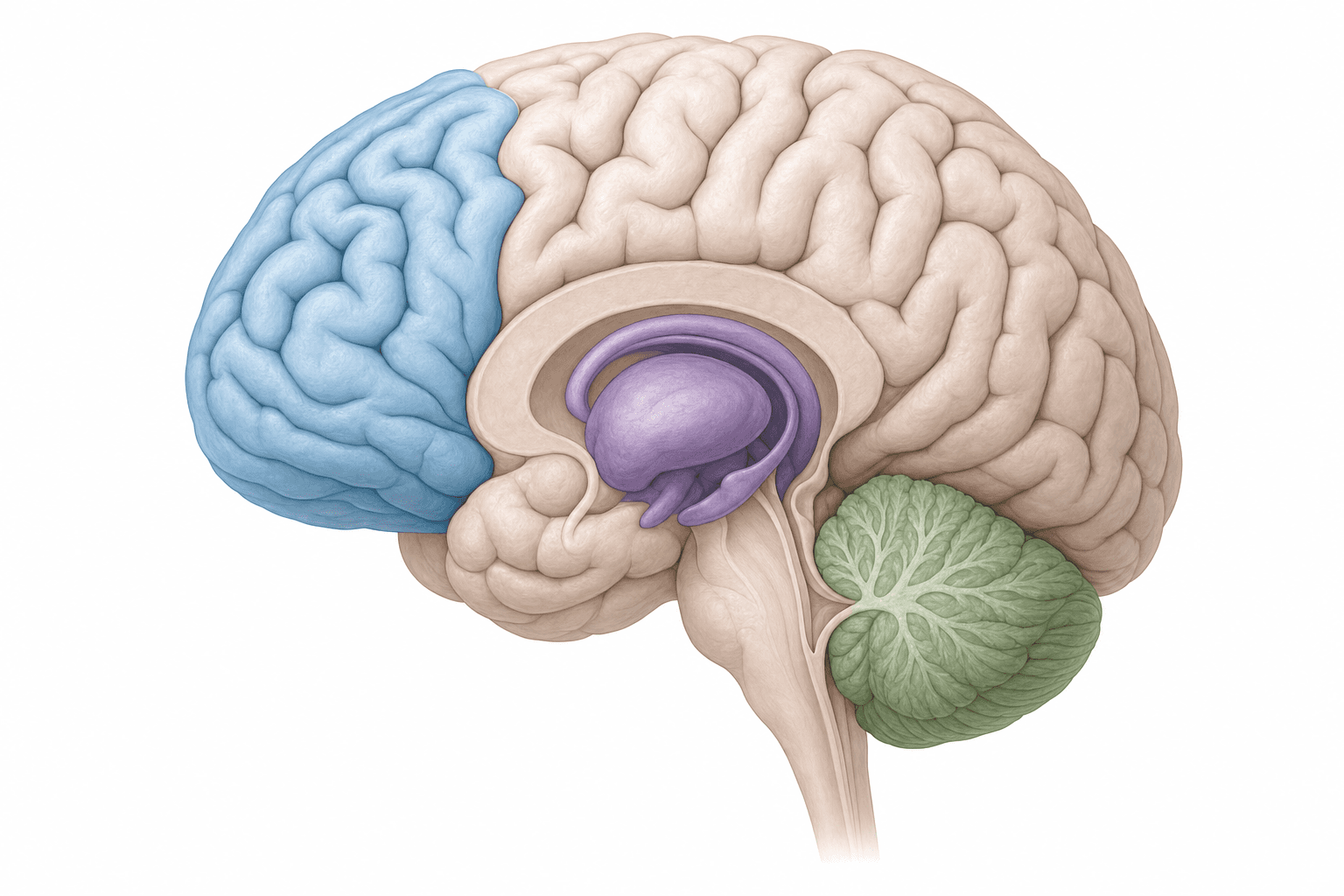
These differences show up most reliably in areas tied to attention, impulse control, and planning:
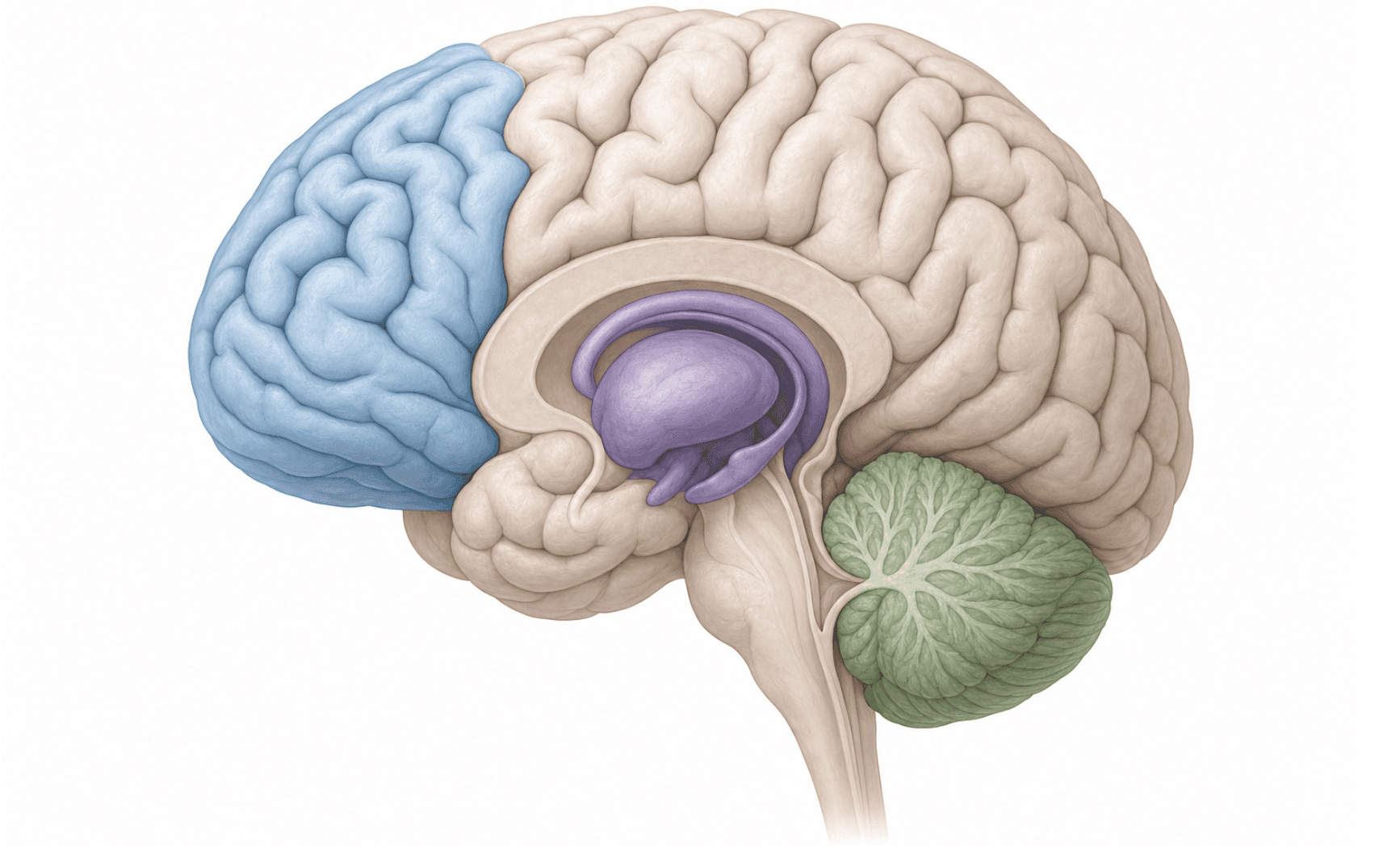
The prefrontal cortex, which governs decision-making and impulse regulation, tends to be thinner and slower to mature in people with ADHD, with research suggesting cortical development may lag by roughly three years on average.
The basal ganglia, a set of structures involved in managing movement and reward-based learning, are often reduced in volume and show altered activity patterns.
The cerebellum, long associated with motor coordination, also plays a role in timing and attention, and shows volume differences in the brains of people with ADHD.
Dopamine and norepinephrine
Much of the functional difference stems from neurotransmitter signaling. Dopamine and norepinephrine, two chemical messengers that carry signals between neurons, are less available or less efficiently used in ADHD-affected brain circuits. This affects how the brain registers reward, maintains attention, and filters out irrelevant information. It is one reason why stimulant medications that boost dopamine and norepinephrine can reduce symptoms in many people, though treatment outcomes vary and medication is not appropriate for everyone.
These brain differences are not signs of damage. They reflect a nervous system that developed and operates differently, shaped by the same genetic and environmental factors discussed throughout this article.
Environmental and prenatal risk factors
Genetics does not tell the whole story. A range of environmental exposures, particularly those occurring before or shortly after birth, can raise the likelihood of ADHD in children who may already carry a genetic predisposition.
Prenatal exposures
Research has identified several factors during pregnancy that are associated with higher ADHD rates:
Tobacco smoke exposure in utero is one of the more consistently studied risk factors, with multiple studies finding associations between maternal smoking during pregnancy and attention and behavioral difficulties in offspring.
Alcohol use during pregnancy has been linked to a broader set of neurodevelopmental outcomes, and ADHD symptoms frequently appear alongside fetal alcohol spectrum disorder.
Prenatal exposure to certain environmental toxins, including lead and polychlorinated biphenyls (PCBs), has been associated with attention and impulse control difficulties in children.
Early childhood factors
Exposure does not stop at birth. A few postnatal factors also show up in the research:
Lead exposure in early childhood, even at low levels, has been associated with increased ADHD symptoms in several large studies.
Severe early adversity, including neglect or institutional deprivation, can affect brain development in ways that may produce ADHD-like symptoms or worsen underlying vulnerability.
These associations are correlational, not causal, in most cases, and no single exposure guarantees an ADHD diagnosis. Most researchers view environmental risk factors as influences that interact with genetic predisposition, not as independent causes.
Less efficient dopamine transmission in the prefrontal cortex makes maintaining focus harder, while norepinephrine supports working memory and filtering distractions
Risk factor type | Estimated contribution to ADHD | Key mechanisms and evidence |
|---|---|---|
Genetic variants | Roughly 74% of ADHD trait variation across populations | Hundreds of common variants affecting dopamine receptor genes like DRD4 and DRD5, dopamine transporter gene DAT1, and SNAP25 involved in neurotransmitter release |
Brain structure differences | Consistent across people with ADHD in imaging studies | Prefrontal cortex development lags by roughly three years on average, with reduced basal ganglia and cerebellum volume affecting attention and timing |
Dopamine and norepinephrine signaling | Core neurotransmitter systems affected in ADHD | |
Prenatal tobacco exposure | Associated with higher ADHD rates in multiple studies | Maternal smoking during pregnancy is linked to attention and behavioral difficulties in offspring through developmental effects on the nervous system |
Early lead exposure | Associated with increased ADHD symptoms at low levels | Lead exposure in early childhood affects brain development in ways that can produce or worsen attention and impulse control difficulties |
What doesn't cause ADHD: debunking common myths
Several myths about ADHD have circulated for decades, and some remain surprisingly common even now.
Parenting style does not cause ADHD
Poor parenting, too much screen time, and too much sugar are frequently blamed, but research does not support any of these as causes. Stressful home environments can worsen symptoms, but they do not create the underlying neurological differences that define ADHD.
Food and screens are not root causes
Sugar consumption has been studied repeatedly and has not been shown to cause ADHD or meaningfully worsen symptoms in controlled research settings.
Screen time may interact with attention difficulties, but there is no evidence that it produces the brain-based differences seen in people with ADHD.
Food dyes and additives remain an area of ongoing research, though current evidence does not support them as a primary cause.
Vaccines do not cause ADHD
No credible scientific evidence links vaccines to ADHD. This claim has been studied and rejected across multiple large studies.
The role of comorbid conditions
Research suggests up to 80% of adults with ADHD have at least one coexisting psychiatric condition, and similar rates appear in children with ADHD. Depression, anxiety, bipolar disorder, OCD, substance use disorder, and eating disorders are among the most common.
This matters clinically because many of these conditions share symptoms. Trouble concentrating shows up in both ADHD and depression. Restlessness overlaps with anxiety. When conditions stack, a clinician focused on only one may miss the others entirely, leading to incomplete treatment or the wrong diagnosis altogether.
Treating ADHD well often means accounting for what else is present, beyond what first surfaces on a checklist.
Getting an ADHD evaluation with Legion Health
If you are an adult in Texas and think ADHD may be affecting your work, relationships, or daily functioning, a psychiatric evaluation can help clarify what is going on.
Legion Health connects Texas adults with board-certified psychiatric providers for ADHD evaluations and ongoing medication management, all done via telehealth. You are assigned a licensed clinician directly, so there is no directory to browse or a long waitlist to join. Care is led by clinicians, not software.
Treatment plans are individualized and based on a thorough evaluation, and may include stimulant or non-stimulant medication options when clinically appropriate.
If you are ready to get a clearer picture of what you are dealing with, scheduling an evaluation is a straightforward next step.
Final Thoughts on ADHD Genetics and Brain Differences
Genetics account for most of ADHD's heritability, but how those genes interact with brain development, neurotransmitter systems, and environmental exposures determines when and how symptoms appear. Understanding the science behind ADHD can make it easier to frame your experience as neurological rather than moral. If you're in Texas and ready to figure out whether this applies to you, an evaluation is the practical next step toward treatment that fits your situation.
FAQ
What causes ADHD in adults?
ADHD develops through a combination of genetic predisposition and environmental factors, with genetics accounting for roughly 74% of ADHD trait variation. The condition involves measurable differences in dopamine and norepinephrine signaling in the brain, alongside structural variations in regions tied to attention and impulse control, shaped by hundreds of common genetic variants rather than a single gene.
ADHD genetics vs environmental factors: Which matters more?
Genetics plays a larger role, explaining about 74% of ADHD trait variation, but environmental exposures can influence whether and how those genetic traits manifest. Prenatal exposures like tobacco smoke or lead, and early childhood adversity, can raise ADHD risk in people with a genetic predisposition; the two factors interact instead of working independently.
Can ADHD be caused by parenting or too much screen time?
No. Research does not support parenting style, screen time, or sugar consumption as root causes of ADHD. These factors may interact with existing symptoms or create stress that worsens them, but they do not produce the underlying brain-based differences seen in people with ADHD.
How do I know if my symptoms are ADHD or something else?
A psychiatric evaluation can clarify what's going on, especially since three-quarters of adults with ADHD have at least one coexisting condition like anxiety or depression. Trouble concentrating can occur across multiple conditions, so a clinician will systematically rule out other explanations and consider the complete picture before making a diagnosis.
What should I expect from an ADHD evaluation in Texas?
Legion Health connects Texas adults with board-certified psychiatric providers for ADHD evaluations via telehealth, typically within 3 to 5 days. You are assigned a licensed clinician who conducts a thorough evaluation to determine whether ADHD or another condition better explains your symptoms, and treatment plans are individualized based on that assessment; not everyone is a good candidate for stimulant medication, and prescribing controlled substances requires careful evaluation and follow-up.
This article is for informational purposes and is not medical advice. If you think you may have symptoms of a mental health condition, a psychiatric evaluation can help.
We're honored to support thousands on their journeys. Here's what some have shared:

I have been seeing Blessing since June and it has been an amazing experience. She is the first provider that has actually listened to me about my symptoms and how much they are affecting my life. She is helpful and is very cautious about which medications to prescribe so that we limit side effects. Overall I could not be happier! I have sent several friends to Legion and Blessing.

Excellent service

I have had great care. The staff is always available and they are very caring. When you are dealing with the stresses of life, it is good to know there are people who understand.

My provider listens to how I’m feeling and has truly made a significant impact on my mental health, specifically anxiety! It’s greatly reduced and I had lived my whole life full of worry! Grateful!!

I’m very pleased with the ease of use to book appointment and also the quality of care. Highly recommend !

Really great experience. I got an appointment within a week and the doctor was really nice and professional and they scheduled my labs and everything in a timely manner. I was able to get them done locally and they reviewed them within the next 2 or 3 days with me over video conference. Really good experience!
Related articles

Signs of Adult ADHD You Might Be Brushing Off (June 2026)
Adult ADHD Signs You're Missing (June 2026)

Concerta vs Adderall: Two Common ADHD Medications, Compared by Mechanism (June 2026)
Concerta vs Adderall: ADHD Meds Compared (Jun 2026)

How Stimulant Medications Work: Understanding Adderall, Vyvanse, and Ritalin (June 2026)
How Stimulant Medications Work (June 2026)