Feb 22, 2026
Remedy Psychiatry Reviews & Alternatives (Feb 2026)
Written by:

Yash M. Patel
Co-Founder & CEO, Legion Health

TLDR:
Remedy accepts only Aetna, Cigna, Optum, and UnitedHealthcare; many patients pay a monthly subscription fee.
ADHD visits rely on clinical interviews without objective testing tools.
Legion Health accepts Blue Cross, Aetna, Cigna, UnitedHealthcare, and most Texas commercial plans at a copay.
Legion Health includes free FDA‑cleared QbCheck ADHD testing with appointments usually available within days.
If you’re searching for Remedy Psychiatry alternatives, you’re likely weighing whether a flat monthly subscription makes sense for your needs or if an insurance‑based clinic would be a better financial and clinical fit. Remedy offers unlimited video visits and messaging for a monthly fee, but it only works with a short list of insurance carriers, which leaves many people paying out of pocket. For ADHD, care is based on clinical interviews without objective testing, and there is no built‑in structure for coordination with your primary care doctor when controlled substances are involved. This guide explains how Remedy works, when it can help, and which alternatives may be better suited to your insurance, state, and treatment goals.
What is Remedy Psychiatry and How Does It Work?
Remedy Psychiatry provides virtual psychiatric care for adults, teens, and children through video visits and secure messaging. New patients start with a roughly 50‑minute visit where a psychiatric clinician reviews symptoms, discusses treatment options, and outlines a plan. After that, the monthly subscription covers ongoing medication visits and messaging, which can appeal to patients who expect frequent contact.
The clinical team includes psychiatrists who supervise psychiatric nurse practitioners, and appointments are often available in the evenings and on weekends. Remedy treats conditions such as anxiety, depression, OCD, PTSD, bipolar disorder, insomnia, and ADHD, and its focus is on medication management versus therapy. The company works with a limited set of insurance plans (Aetna, Cigna, Optum, UnitedHealthcare); many people instead pay a monthly fee that includes the first visit and then recurring access.
Why Consider Remedy Psychiatry Alternatives?
Remedy can be a good match if you want frequent check‑ins for a single monthly price and your insurance aligns with their accepted plans. Patients who need several visits in a short span may appreciate being able to book without worrying about a separate charge each time. Evening and weekend hours can also help if daytime appointments are difficult.
However, several factors push people to look at other options. Insurance acceptance is narrow, so people with Blue Cross, Medicaid, Medicare, or many employer plans pay out of pocket. The $89 to $99 subscription for adults or children continues even in months when you only need one visit, which can feel expensive if your care is stable. For ADHD, assessment is based on interviews without objective tools like computerized attention testing, and there is no clear structure for sharing information with a primary care doctor who might be tracking vitals, labs, or other health data. If you’d prefer insurance‑based visits at a copay, objective ADHD testing, or more organized coordination with other clinicians, alternatives may fit better.
Best Remedy Psychiatry Alternative Overall: Legion Health
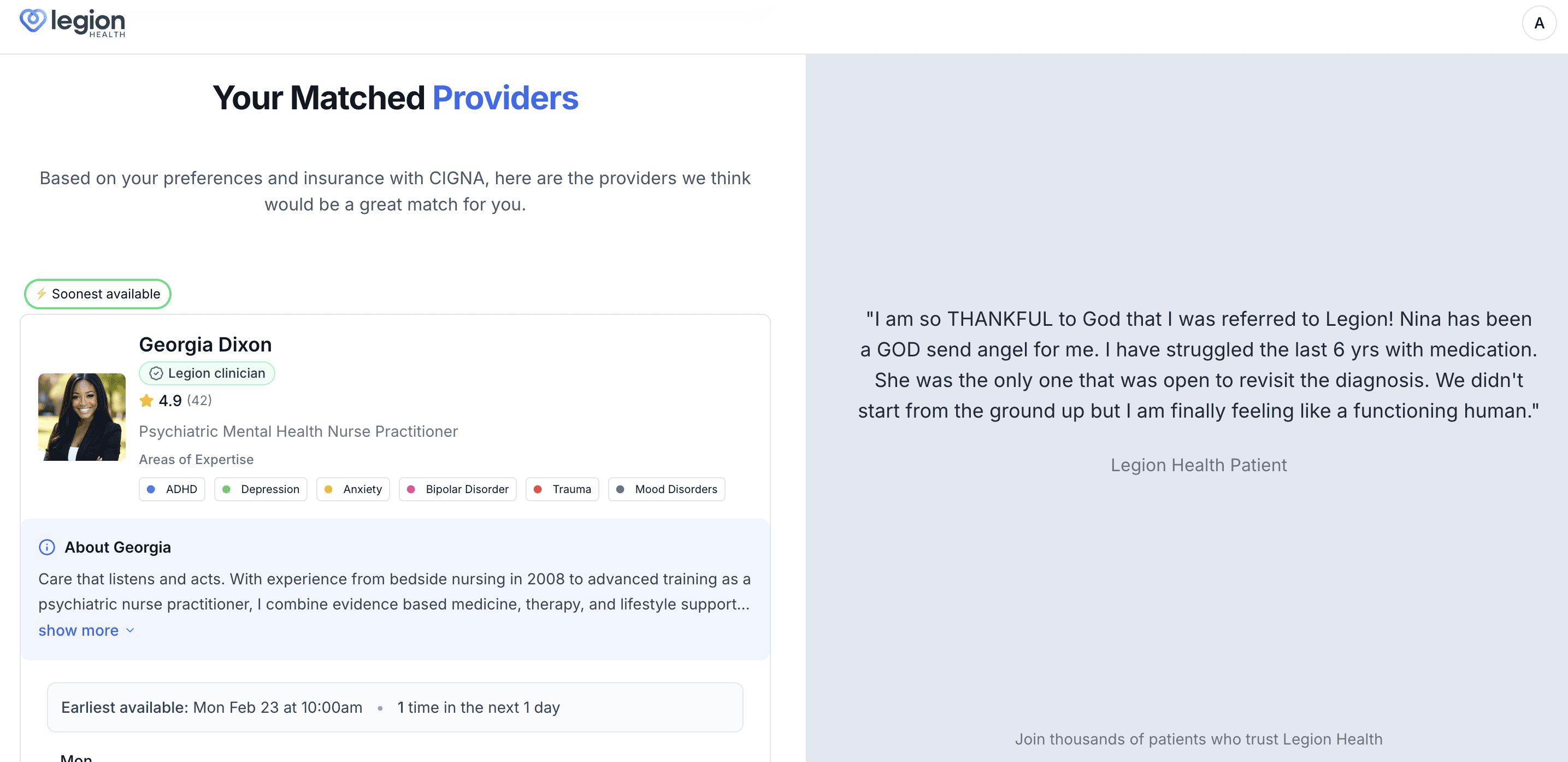
Legion Health is a Texas‑based virtual psychiatry clinic that focuses on adults needing care for conditions such as anxiety, depression, ADHD, and bipolar disorder. Care is delivered by board‑certified psychiatric clinicians, and visits are billed to insurance at a standard specialist copay versus a subscription. Legion Health works with Blue Cross, Aetna, Cigna, UnitedHealthcare, Magellan, Oscar, and most other commercial plans in Texas.
What they offer:
Psychiatric evaluations and medication management for adults with conditions like ADHD, anxiety, depression, and bipolar disorder
Free FDA‑cleared QbCheck ADHD testing as part of the evaluation when it is clinically appropriate
Appointments within days, including evening availability, all delivered through secure telehealth across Texas
Good for: Texas adults who want insurance‑friendly virtual psychiatry, objective ADHD testing, and reliable access to licensed clinicians without traveling to a clinic.
Limitation: Care is available only to people physically in Texas, so it cannot serve people in other states.
Bottom line: If you live in Texas and want a clinic that combines broad insurance coverage, careful medication decisions, and built‑in ADHD testing, Legion Health is often a stronger fit than a cash subscription model.
Talkiatry
Talkiatry is a psychiatry group that serves many states with video visits and, in some regions, in‑office appointments. Care is led by psychiatrists who see adults and children and provide diagnosis and medication management. The company positions itself as an insurance‑based practice and does not rely on a monthly subscription.
What they offer:
60‑minute first visits with psychiatrists, followed by ongoing medication visits
Broad insurance acceptance in many states for patients ages 5 and up
Virtual visits that reduce travel time, with some locations offering in‑person care
Good for: People who live in a Talkiatry service state, have compatible commercial insurance, and want to work directly with psychiatrists for ongoing care.
Limitation: The clinic does not promote objective ADHD tools as part of standard evaluations, and there is no clear self‑pay route if your insurance is not accepted.
Bottom line: Talkiatry is a strong option if you want psychiatrist‑led, insurance‑based virtual care across multiple states, but it is less focused on ADHD testing than some alternatives.
Circle Medical
Circle Medical is a primary care and mental health service that delivers visits through telehealth and select partner offices. Family doctors and nurse practitioners can manage both physical and mental health conditions, simplifying care for people who prefer a single point of contact.
What they offer:
Primary care plus mental health treatment, including medications for depression, anxiety, and ADHD
Same‑day or next‑day appointments in many regions through telehealth
Integration of physical health concerns (such as blood pressure or lab work) with mental health treatment
Good for: Patients who want one clinic for both primary care and common mental health conditions, and who value quick access for general medical issues.
Limitation: Most mental health care is led by primary care clinicians versus psychiatric specialists, which may not be suited to complex cases.
Bottom line: Circle Medical can work well for people with straightforward needs who want combined primary and mental health care, but those who need specialized psychiatry or detailed ADHD work‑ups may prefer a dedicated psychiatric clinic.
Mindpath Health
Mindpath Health is a multi‑state group that offers therapy, psychiatry, and interventional treatments through in‑person clinics and telehealth. Some sites provide TMS and other advanced services, which can help patients with depression that has not improved with standard medications.
What they offer:
Therapy and medication management under one company
In‑person and virtual visits for a wide age range, depending on location
Access to TMS and other interventional services at certain clinics
Good for: People who want a single organization for therapy and psychiatry and may need in‑office treatments for difficult‑to‑treat depression.
Limitation: Access depends heavily on living near a clinic, and objective ADHD testing is not focused on as a core feature.
Bottom line: Mindpath Health is a solid match if you want therapy plus psychiatry and may require advanced procedures, but it may be less convenient and less ADHD‑focused than virtual clinics that include objective testing.
LifeStance Health
LifeStance Health is a large behavioral health group with thousands of clinicians across many states. They offer therapy and psychiatry through office visits, telehealth, or a mix of both, depending on the location and provider.
What they offer:
Wide network of therapists, psychiatrists, and nurse practitioners across numerous states
Multiple visit formats, including in‑person, online, and hybrid options
Broad commercial insurance acceptance at many sites
Good for: People who want many provider options and combined therapy and medication care, often under their existing insurance.
Limitation: Experience varies by location, and scheduling or continuity can be challenging in very large systems.
Bottom line: LifeStance Health suits patients who focus on clinician choice and mixed visit formats, though it may feel less focused than a smaller, virtual‑first psychiatry clinic.
Feature Comparison: Remedy Psychiatry vs Top Alternatives
Feature | Remedy Psychiatry | Legion Health | Talkiatry | Circle Medical | Mindpath Health | LifeStance Health |
|---|---|---|---|---|---|---|
Geographic Coverage | California and select states | Texas | 43 states | 30 states + DC | Multiple states | 33 states |
Insurance Accepted | Aetna, Cigna, Optum, and UnitedHealthcare only | All commercial plans in Texas | 60+ plans (insurance-only) | Most PPO plans | Most commercial plans | 300+ commercial plans |
Self-Pay Option | Yes ($89-99/month unlimited) | Yes (also accepts insurance) | No | Yes | Limited | Yes (varies by location) |
Objective ADHD Testing | No | Yes (free QbCheck) | No | No | Not advertised | Not advertised |
Appointment Availability | Days, nights, weekends | Within days, evenings available | Varies | Same or next-day | Varies | Varies |
Controlled Substances | Yes | Yes (with safety protocols) | Yes (where legal) | Yes (with requirements) | Yes | Yes |
Typical Cost with Insurance | N/A (limited plans) | Under $30 copay | $30 or less | Varies | Standard copay | Varies by provider |
Why Legion Health is the Best Remedy for a Psychiatry Alternative
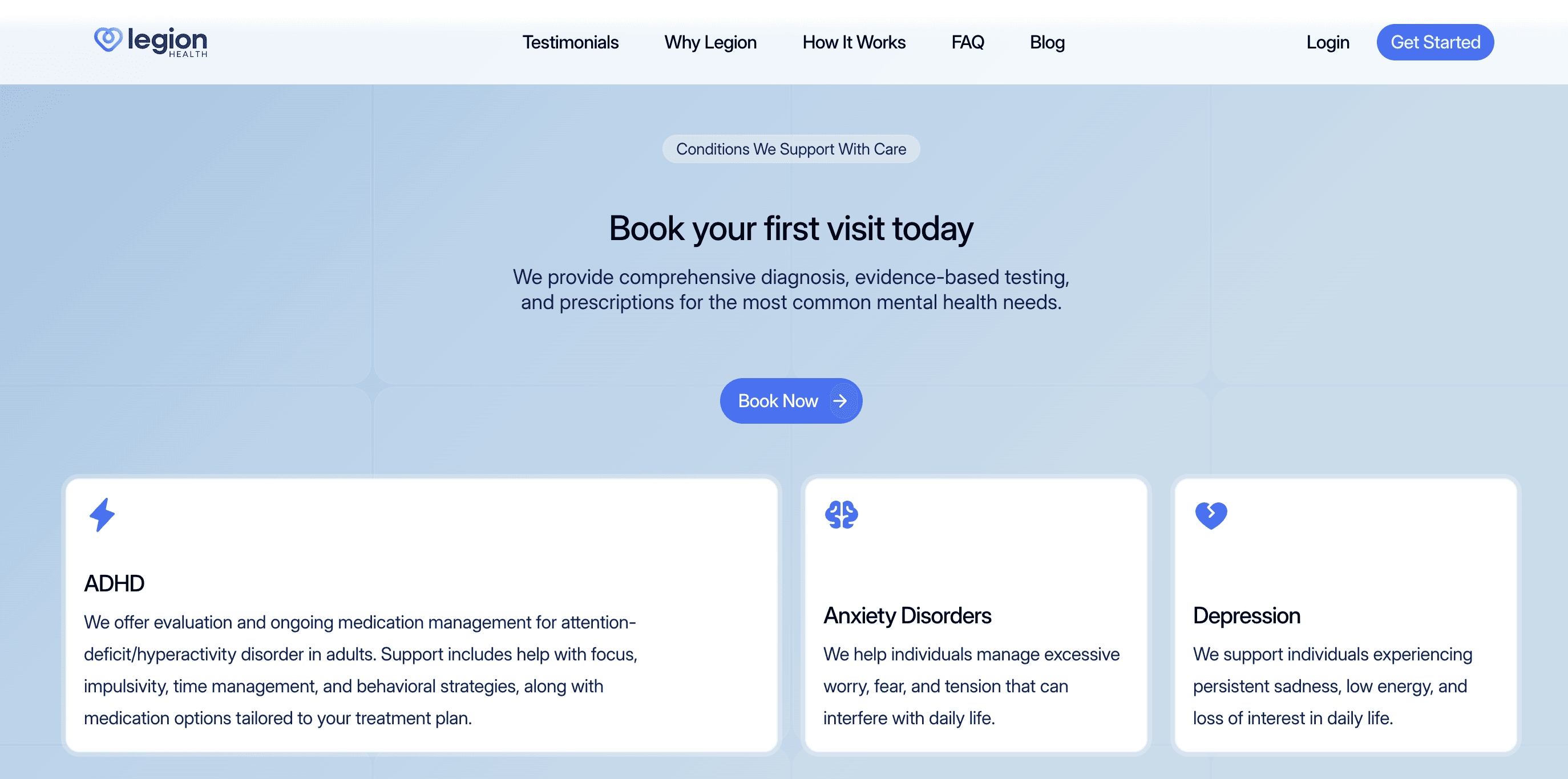
If you want psychiatric care in Texas with broad insurance access and objective ADHD testing, Legion Health is built to close gaps that many subscription telepsychiatry services leave open.
Broader Insurance Access
Remedy works with only four insurance carriers, so many patients end up paying the monthly subscription fee out of pocket. Legion Health accepts Blue Cross, Aetna, Cigna, UnitedHealthcare, Magellan, Oscar, and most commercial plans in Texas, so visits are usually billed to insurance at your standard copay without a membership add‑on.
Complimentary FDA-Cleared ADHD Testing
Legion Health offers QbCheck ADHD testing when it fits the clinical picture, giving patients access to an FDA‑cleared computerized assessment that measures attention, impulse control, and activity against age‑based norms. Clinicians combine those results with an interview, which provides objective data where Remedy relies on interviews alone.
Appointments Within Days
New patients at Legion Health can usually schedule within days, with evening options that work around jobs and family schedules. When controlled medications are appropriate, clinicians follow strict diagnostic standards and ongoing safety monitoring.
If you want a clear plan for your symptoms, the next step is a psychiatric evaluation. You can see if Legion Health is a fit and schedule your first visit.
Final Thoughts on Selecting Telepsychiatry Care
Remedy Psychiatry can be helpful for people who want frequent check‑ins and a flat monthly fee, but many patients end up paying out of pocket because the service only works with a short list of insurance plans. For Texans comparing Remedy Psychiatry alternatives, an insurance‑based clinic like Legion Health often provides a better mix of coverage, cost control, and ADHD support through FDA‑cleared testing.
FAQs
Why would someone look for alternatives to Remedy Psychiatry?
People often search for alternatives because Remedy only accepts four major insurers, so patients with Blue Cross, Medicaid, Medicare, or many employer plans pay the full subscription themselves. The monthly fee can feel high if you only need visits every few months, and some people want ADHD care that includes objective testing and more structured coordination with a primary care doctor.
What should you look for when comparing online psychiatry services?
Focus on insurance acceptance (does it take your plan at copay rates?), geographic availability in your state, appointment wait times, and whether the provider offers specialized services you need like FDA-cleared ADHD testing, therapy combined with medication management, or coordination with your primary care doctor for health monitoring.
When does it make sense to switch from Remedy to another service?
Key factors include whether a clinic accepts your insurance at copay rates, how quickly you can get an appointment, and whether it operates in your state. It also helps to check for services that matter to you, such as FDA‑cleared ADHD testing, therapy plus medication in one place, or deliberate coordination with a primary care doctor for monitoring.
Can you get psychiatric care through your insurance copay instead of a subscription?
Yes. Clinics such as Legion Health, Talkiatry, and Mindpath Health often bill insurance for visits, so you pay your usual copay or coinsurance per session, which can be more cost‑effective if you do not need unlimited appointments every month.
How does objective ADHD testing differ from clinical interviews alone?
FDA‑cleared computerized tests, such as QbCheck, measure attention, impulse control, and activity level using structured tasks and compare results with age‑matched norms, providing clinicians with standardized data. Interviews alone rely on self‑report and observation, so combining both approaches can strengthen diagnostic accuracy and support safer medication choices over time.
We're honored to support thousands on their journeys. Here's what some have shared:

Really great experience. I got an appointment within a week and the doctor was really nice and professional and they scheduled my labs and everything in a timely manner. I was able to get them done locally and they reviewed them within the next 2 or 3 days with me over video conference. Really good experience!

Legion Health has been a great experience. Treat you like a person and design a custom plan to help your situation.

I’ve had a very positive and satisfying experience with Legion health and my provider, Blessing Ugbor. My needs have been met and my concerns have been addressed in a timely manner. I have been able to make contact easily and talk to real people 😊. I appreciate Legion Health for all the care and support I’ve received so far.

Really great and positive experience must try if you have been thinking about it

My first time using a teledoc. They simplified the process and my Dr. has been great. To say its been a great experience is an understatement. I highly recommend them.

They're great at communicating/meeting your needs
Related articles

Legion Health vs One Behavioral: Which is Better? (May 2026)
Legion Health vs One Behavioral (May 2026)
One Behavioral Reviews, Pricing, and Alternatives (May 2026)
One Behavioral Reviews & Alternatives May 2026

Being Health Reviews, Pricing, and Alternatives (May 2026)
Being Health Reviews & Alternatives May 2026