Jun 27, 2026
Concerta vs Adderall: Two Common ADHD Medications, Compared by Mechanism (June 2026)
Written by:

Charlotte Coates

TLDR:
Concerta (methylphenidate) blocks neurotransmitter reuptake, while Adderall (amphetamine) blocks reuptake and pushes dopamine out of storage, producing stronger release.
Concerta lasts 10 to 12 hours as a once-daily dose, while Adderall IR lasts 4 to 6 hours and Adderall XR lasts 8 to 10 hours.
Side effects differ in emotional tone: Adderall may cause mood elevation and rebound irritability, while Concerta's release curve tends to feel more even.
Both medications face ongoing supply disruptions in 2026, with Adderall shortages generally more severe and prolonged.
A clinician can help you weigh formulation, duration, anxiety comorbidity, and availability to find the right starting point.
Your clinician hands you a prescription for ADHD medication and you see either methylphenidate or amphetamine salts on the label. Methylphenidate blocks the reuptake of dopamine and norepinephrine. Amphetamine does that and also forces those neurotransmitters out of storage directly. Most people do not know what separates those two drug classes beyond that, but the mechanical difference matters clinically. Concerta vs Adderall is not just a choice between brands or release schedules. That mechanism difference is why some people tolerate one medication better than the other, why duration varies, and why switching from Adderall to Concerta can shift your entire experience of treatment.
TLDR:
Concerta (methylphenidate) blocks neurotransmitter reuptake, while Adderall (amphetamine) blocks reuptake and pushes dopamine out of storage, producing stronger release.
Concerta lasts 10 to 12 hours as a once-daily dose, while Adderall IR lasts 4 to 6 hours and Adderall XR lasts 8 to 10 hours.
Side effects differ in emotional tone: Adderall may cause mood elevation and rebound irritability, while Concerta's release curve tends to feel more even.
Both medications face ongoing supply disruptions in 2026, with Adderall shortages generally more severe and prolonged.
A clinician can help you weigh formulation, duration, anxiety comorbidity, and availability to find the right starting point.
How methylphenidate and amphetamine work in the brain
Both medications increase the availability of dopamine and norepinephrine in the brain, but they get there through different routes.

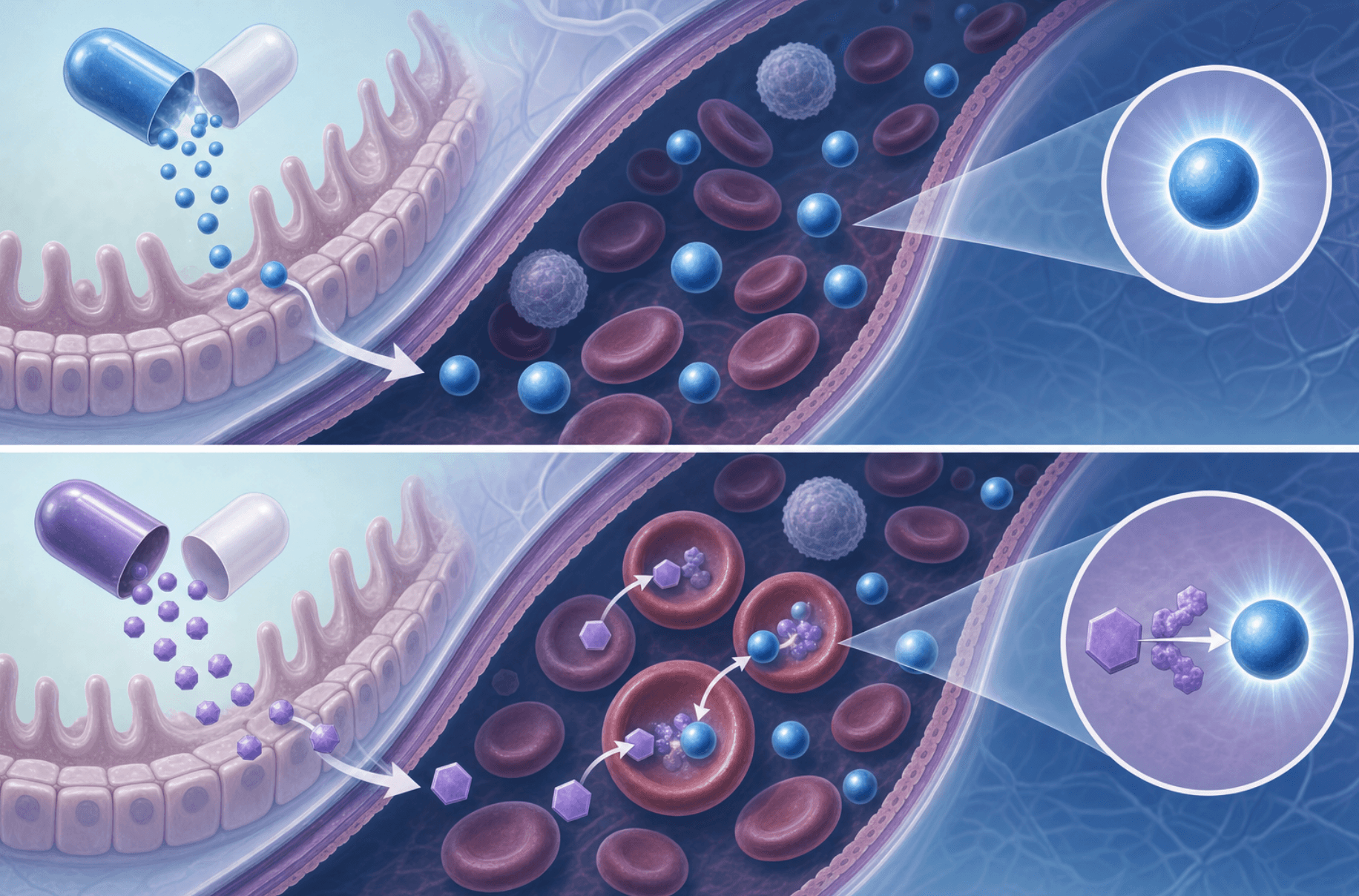
Methylphenidate, the active ingredient in Concerta, works primarily by blocking the reuptake of dopamine and norepinephrine. It occupies the transporter proteins that would normally pull those neurotransmitters back into the neuron, leaving more of them active in the synapse.
Amphetamine, the active ingredient in Adderall, does something more. It blocks reuptake the same way, but it also pushes dopamine and norepinephrine out of storage vesicles and into the synapse directly. Research suggests this dual action produces a stronger release of both neurotransmitters compared to methylphenidate at equivalent doses.
Emerging research suggests stimulants may also act through arousal and reward circuits in the brainstem and striatum, beyond the prefrontal attention pathways that earlier models focused on. The precise scope of these effects remains under active study.
Why the mechanism difference matters clinically
The distinction is more than pharmacological trivia. A clinician assessing treatment response will consider it for a few reasons:
Amphetamine's release mechanism tends to produce a more pronounced effect on dopamine output, which may explain why some patients respond better to one drug class than the other even at similar doses.
Methylphenidate's more targeted reuptake-blocking action may carry a lower risk of certain side effects in patients who are sensitive to strong catecholamine surges.
Neither mechanism guarantees a specific outcome for any individual patient. Response varies considerably, and a clinician may need to try both classes before finding the right fit for your ADHD symptoms.
How long each medication lasts and when it starts working
Both medications take roughly 30 to 60 minutes to start working, but how long they last depends heavily on the formulation.
Concerta is an extended-release formulation only. It uses a pump-based delivery system (OROS technology) that releases methylphenidate gradually over 10 to 12 hours, making it well-suited for full school or workdays.
Adderall comes in two forms:
Adderall IR (immediate-release) lasts 4 to 6 hours, which means most people need a second dose in the afternoon to cover the full day.
Adderall XR (extended-release) lasts 8 to 10 hours by releasing half the dose immediately and the other half several hours later.
Adderall XR (extended-release) lasts roughly 8-10 hours by releasing half the dose immediately and the other half several hours later.
Practical implications for daily scheduling
These differences matter more than they might appear. A medication that wears off mid-afternoon can leave someone struggling with focus exactly when they need to finish work or manage an evening routine. On the other hand, a longer-acting formulation that stays active into the evening may interfere with sleep in some people.
A clinician can help weigh those tradeoffs based on your specific schedule, sleep patterns, and how you respond to stimulant medications generally.
Feature | Concerta (Methylphenidate) | Adderall (Amphetamine) |
|---|---|---|
Mechanism of action | Blocks reuptake of dopamine and norepinephrine by occupying transporter proteins | Blocks reuptake and pushes dopamine and norepinephrine out of storage vesicles into the synapse |
Duration of effect | 10 to 12 hours with once-daily dosing using OROS pump-based delivery system | Adderall IR lasts 4 to 6 hours; Adderall XR lasts 8 to 10 hours with split-dose release |
Formulation options | Extended-release only, designed for single morning dose | Available as immediate-release for shorter coverage or extended-release for longer coverage |
Emotional side effect profile | Smoother release curve tends to produce more even emotional experience across the day | May produce more pronounced mood elevation with potential for irritability or emotional blunting as medication wears off |
Comparing common side effects
Both Concerta and Adderall carry the standard warnings that come with stimulant medications, but their side effect profiles differ in ways that can matter for individual patients.
Both methylphenidate-based medications like Concerta and amphetamine-based medications like Adderall can raise heart rate and blood pressure. Clinicians typically monitor cardiovascular effects for both drug classes, and the degree of impact varies by individual. Appetite suppression and sleep disruption are common to both, and neither is clearly worse than the other on those counts.
Where the drugs part ways more clearly is in emotional tone. Amphetamine-based medications like Adderall may produce more pronounced mood elevation in some patients, which can tip into irritability or emotional blunting as the medication wears off. Concerta's smoother release curve tends to produce a more even emotional experience across the day, though rebound effects are still possible.
Common side effects seen with both medications include:
Decreased appetite, which can affect weight over time if not managed
Difficulty falling asleep, particularly when doses are taken too late in the day
Mild increases in heart rate or blood pressure, which clinicians typically monitor at follow-up visits
Headaches, especially during the first few weeks of use or after dose adjustments
Dry mouth, more commonly reported with amphetamines but possible with either
Not everyone is a good candidate for stimulant medication, and side effect tolerance varies considerably from person to person. A clinician can help you weigh these patterns against your own medical history.
Which medication works better for adults with ADHD
Neither medication is clearly better for all adults with ADHD. Individual response varies enough that a clinician often needs to try one before knowing whether it fits a given patient.
A few factors tend to shape which option a clinician reaches for first:
Prior medication history matters. If a patient has tried one stimulant class without success or with serious side effects, switching to the other is a common and reasonable next step.
Anxiety comorbidity may influence the decision. Some clinicians approach stimulants cautiously in patients with co-occurring anxiety, and the choice between methylphenidate and amphetamine may come down to a patient's specific anxiety profile.
Cardiovascular history is a consideration for both, but clinicians weigh individual risk factors when making that call.
Duration needs and daily schedule can push toward one formulation over another, independent of the drug class itself.
There is no reliable way to predict in advance which class will work better for a specific person. A clinician assessing you will weigh your symptom profile, medical history, and any co-occurring conditions before recommending a starting point.
Availability and ongoing medication shortages in 2026
Both Concerta and Adderall have faced supply disruptions in recent years, and those shortages have not fully resolved as of 2026.
The FDA has tracked amphetamine-based medications, including Adderall and its generics, as in shortage since late 2022. Methylphenidate products have also seen periodic supply gaps, though the disruptions have generally been less severe and less prolonged than those affecting amphetamine formulations.
For people managing ADHD, this creates real friction. A prescription that worked well clinically may be difficult to fill at a given pharmacy on a given week, which can force mid-treatment switches between formulations or manufacturers. Generic substitutions are common, and potency can vary between manufacturers even within the same drug class.
A few things worth knowing:
Shortage status changes frequently, so checking current FDA shortage listings directly is the most reliable way to get up-to-date information instead of relying on what was true months ago.
Pharmacies vary widely in what they stock, and calling ahead before attempting to fill a prescription can save time.
If your usual formulation is unavailable, a prescribing clinician can help assess whether a different formulation, a different release mechanism, or a non-stimulant alternative is appropriate in the interim.
If cost is a consideration alongside availability, Vyvanse, another amphetamine-based option, does not currently have a generic equivalent, which makes it more expensive out of pocket than Adderall generics for many patients.
Controlled substances are prescribed only when clinically appropriate and may require additional steps, documentation, and monitoring. Not everyone is a good candidate for stimulant medication, and any switch prompted by supply issues should involve a clinician instead of an informal substitution.
Choosing between Concerta and Adderall with your clinician
The first prescription is a starting point, not a final answer. Picking between these two medications is less a decision you make once and more a process you move through with a clinician over time.
A few practical factors tend to shape that starting point:
Once-daily dosing matters to some people for consistency or privacy at work or school. Concerta's single-dose structure has a real advantage there, since the release mechanism handles timing without a midday dose.
Coverage flexibility matters to others. Adderall's range of formulations gives a clinician more to work with if your schedule is irregular or your symptom window changes across the day.
Side effect tolerance is genuinely hard to predict before trying something. A clinician will check in on how your body responds early in treatment and adjust from there, whether that means dose changes or switching formulations.
Availability is a real-world constraint worth raising openly. If a preferred formulation is in short supply locally, that can reasonably shift the conversation toward what is reliably accessible.
Controlled substances are prescribed only when clinically appropriate and may require additional steps, documentation, and ongoing monitoring. Not everyone is a good candidate for stimulant medication, and a thorough evaluation comes before any prescribing decision.
Virtual psychiatry and ADHD medication management in Texas

For Texas adults working through an ADHD diagnosis, understanding the difference between methylphenidate (Concerta) and amphetamine-based medications (Adderall) is one part of a larger conversation that happens with a licensed clinician.
Legion Health offers virtual psychiatry for adults in Texas, with care delivered by board-certified psychiatric providers. There is no directory to browse. You are assigned a clinician directly, and appointments can usually be scheduled within days.
ADHD treatment options may include stimulant or non-stimulant medications when clinically appropriate. Treatment plans are individualized and based on a comprehensive evaluation. Controlled substances are prescribed only when clinically appropriate and may require additional steps, documentation, and monitoring.
If you are a Texas adult who has been wondering whether Concerta or Adderall might be right for you, that question is best answered through a insurance-covered psychiatric care, not a checklist. A psychiatric clinician can assess your full history, weigh the mechanism differences covered in this article, and help you decide on a path forward.
Final thoughts on selecting the right stimulant medication
Both Concerta and Adderall increase dopamine and norepinephrine availability, but the pathways differ enough to produce different effects in different people. A clinician weighing your medical history, daily schedule, and co-occurring conditions can help you start with the option most likely to fit, then adjust if needed. If you are in Texas and want an evaluation with a board-certified psychiatric provider, see if Legion is right for you and schedule a visit.
This article is for informational purposes and is not medical advice. If you think you may have symptoms of a mental health condition, a psychiatric evaluation can help.
FAQ
Concerta vs Adderall: which one is better for adults with ADHD?
Neither medication is better for all adults with ADHD; response varies enough that a clinician often needs to try one before knowing whether it fits a given patient. Prior medication history, anxiety comorbidity, cardiovascular history, and daily schedule can all shape which option a clinician reaches for first, but individual response remains unpredictable.
Can I build an ADHD treatment plan without worrying about medication shortages?
Both Concerta and Adderall have faced ongoing supply disruptions as of 2026, with amphetamine-based medications experiencing more severe and prolonged shortages. If your usual formulation is unavailable, a prescribing clinician can help assess whether a different formulation, release mechanism, or non-stimulant alternative is appropriate instead of attempting informal substitutions.
What's the main difference between methylphenidate and amphetamine mechanisms?
Methylphenidate (Concerta) blocks the reuptake of dopamine and norepinephrine, while amphetamine (Adderall) blocks reuptake and pushes those neurotransmitters out of storage vesicles directly. This dual action tends to produce stronger neurotransmitter release with amphetamine, which may explain different response and side effect profiles between the two drug classes.
How long does Concerta last compared to Adderall?
Concerta's extended-release system lasts 10 to 12 hours with a single morning dose, while Adderall XR lasts 8 to 10 hours and Adderall IR lasts only 4 to 6 hours. These duration differences matter practically. A medication that wears off mid-afternoon can leave someone struggling exactly when they need focus, while a longer-acting formulation may interfere with sleep in some people.
When should I consider switching from methylphenidate to amphetamine or vice versa?
If you've tried one stimulant class without success or with serious side effects, switching to the other is a common and reasonable next step. A clinician assessing your response will weigh factors like side effect tolerance, effectiveness on your specific symptom profile, and any co-occurring conditions before deciding whether to adjust dose, change formulations, or switch drug classes entirely.
How legion health Can Help You
If you’re in perimenopause or menopause and want guidance from clinicians who specialize in women’s midlife health, book a virtual visit with Legion Health today.
Hormonal changes are at the root of many symptoms women experience in the years before and after their periods stop.
Our trained menopause specialists help you connect the dots and guide you toward safe, effective solutions.
Whether you need personalized care or a prescription-based treatment plan to manage symptoms—including brain fog, hot flashes, sleep issues, mood swings, and weight gain—we’ve got you covered. Learn more here.
We're honored to support thousands on their journeys. Here's what some have shared:
Related articles

Signs of Adult ADHD You Might Be Brushing Off (June 2026)
Adult ADHD Signs You're Missing (June 2026)

How Stimulant Medications Work: Understanding Adderall, Vyvanse, and Ritalin (June 2026)
How Stimulant Medications Work (June 2026)
Adderall vs. Vyvanse: Key Differences Explained (June 2026)
Adderall vs Vyvanse Differences (June 2026)