Dec 9, 2025
Cerebral Reviews, Pricing, and Alternatives (March 2026)
Written by:

Arthur MacWaters
Co-Founder, Legion Health

TLDR:
Cerebral offers subscription-based virtual therapy and medication management, with partial insurance coverage through plans such as Aetna, Blue Cross Blue Shield, Cigna, Optum, and UnitedHealthcare.
The service does not prescribe controlled substances, including ADHD stimulants or benzodiazepines, so treatment is limited to non-stimulant options.
Subscription pricing can run from about 60 dollars per month for medication management to more than 300 dollars per month for combined plans, with prescriptions billed separately at the pharmacy.
For many adults who want stimulant treatment when appropriate, objective ADHD testing, and predictable copays instead of subscriptions, Legion Health is often the strongest alternative to Cerebral.
Finding online psychiatric care that truly fits your situation can feel harder than it should be. Cerebral is one of the most visible online therapy platforms with a mix of therapy and medication plans and some insurance coverage, but it also has clear limits. Cerebral no longer prescribes controlled substances such as ADHD stimulants or benzodiazepines, and its subscription model means you start paying before you know whether the match or medication options make sense for you. This guide walks through how Cerebral works, what you actually pay, recent policy and legal developments, and how it compares with alternatives such as Legion Health, Talkiatry, Talkspace, and Brightside.
TLDR:
Cerebral offers subscription-based virtual therapy and medication management, with partial insurance coverage through plans such as Aetna, Blue Cross Blue Shield, Cigna, Optum, and UnitedHealthcare.
The service does not prescribe controlled substances, including ADHD stimulants or benzodiazepines, so treatment is limited to non-stimulant options.
Subscription pricing can run from about 60 dollars per month for medication management to more than 300 dollars per month for combined plans, with prescriptions billed separately at the pharmacy.
For many adults who want stimulant treatment when appropriate, objective ADHD testing, and predictable copays instead of subscriptions, Legion Health is often the strongest alternative to Cerebral.
What Is Cerebral and How Does it Work?
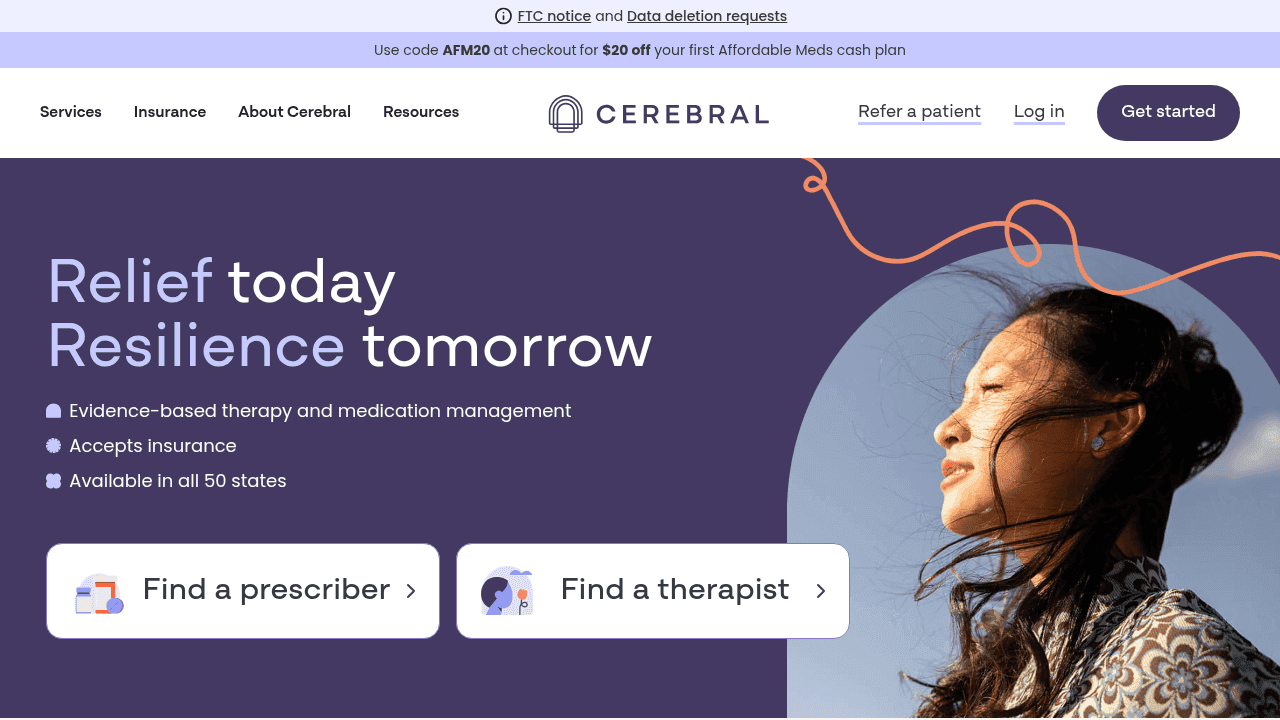
Cerebral connects you with mental health care through a subscription model. You start by completing an online assessment about your symptoms, medical history, and what you hope will change with treatment. Based on that intake, the tool suggests a subscription tier, and you can choose therapy, medication management, or both.
Medication visits are handled by clinicians, including psychiatric nurse practitioners, physicians, and physician assistants. Therapy sessions are provided by licensed therapists. Appointments take place via video or phone through Cerebral’s app or website, and follow-up communication can happen through the same tool.
Cerebral accepts several major insurance plans, including Aetna, Blue Cross Blue Shield, Cigna, Optum, and UnitedHealthcare, in many areas. If your plan is out-of-network or you are uninsured, you pay the subscription fees out of pocket. Cerebral currently offers services across the United States.
One major restriction: Cerebral does not prescribe controlled substances, including ADHD stimulants (such as Adderall or Vyvanse) or benzodiazepines for anxiety or insomnia. If your treatment requires these medications, this service won't work for you.
Prescriptions can be sent to your local pharmacy or filled through Cerebral’s partner pharmacy service, and you pay medication copays or cash prices separately from the subscription.
Why Consider Cerebral Alternatives?
Cerebral can work well if you want virtual care with non-stimulant medications and your insurance is in network. The limits become more important if you rely on controlled medications, need more diagnostic clarity, or want a different cost structure.
Controlled Substance Limits
The controlled substance policy removes access to common first-line ADHD and anxiety medications. If you have ADHD and your clinician believes a stimulant fits your situation, Cerebral cannot prescribe it. The same applies to benzodiazepines for severe anxiety or panic. You are limited to non-controlled medications such as atomoxetine, bupropion, viloxazine, or guanfacine.
Subscription Costs
If you are not using insurance, the current price is about 180 dollars every 3 months for a medication-management plan, which works out to roughly 60 dollars per month. Therapy-only plans are around 295 dollars per month, and combined therapy-plus-medication plans can reach about 365 dollars per month. These fees cover visits and care coordination. You still pay your standard pharmacy copays or cash prices for medications.
Without insurance, individual therapy visits cost about 175 dollars for the first session, with follow-ups typically between 135 and 175 dollars each.
Provider Matching and Experience
At intake, you may be matched with a range of clinician experience levels. In some cases, the first match is an associate-level therapist working under supervision versus a fully independent clinician. If you want to change to a more experienced provider, you usually need to contact support, which can feel frustrating when you are already struggling with symptoms.
Lack of Objective Diagnostic Tools
Cerebral does not offer objective ADHD testing or other standardized digital tools that generate measurable performance data. If you prefer an ADHD evaluation that includes structured tests such as QbCheck or want consistent symptom tracking with validated scales built into the care model, this service will not provide those pieces.
These limits matter most if you need faster access to stimulants, a fuller range of psychiatric options, or stronger diagnostic data to guide treatment decisions.
Best Cerebral Alternatives in October 2025: Best Overall Legion Health
Legion Health is a Texas-based virtual psychiatry clinic that focuses on careful diagnosis and insurance-based treatment for adults with depression, anxiety, ADHD, and related conditions. Care is delivered through live video visits with licensed psychiatric clinicians, with most major commercial plans in Texas accepted.
What they offer
Full psychiatric evaluations and follow-up visits by live video, with licensed clinicians who focus on adult mood and attention conditions.
ADHD care that can include stimulant prescribing when it fits your situation, supported by free FDA-cleared QbCheck testing to add objective data.
Insurance-first pricing with all major Texas commercial plans in network, so many people pay around a typical specialist copay instead of subscription fees.
Good for: Texas adults with commercial insurance who want comprehensive virtual psychiatry, including ADHD treatment with stimulants when appropriate and objective testing included.
Limitation: Legion Health currently serves adults in Texas only, so it is not available if you live or receive care outside the state.
Bottom line: Legion Health is a strong alternative if you want insurance-based virtual psychiatry with objective ADHD testing and access to stimulant treatment under clear clinical protocols.
Talkiatry
Talkiatry is a telepsychiatry group that connects adults with psychiatrists and other psychiatric clinicians for live video evaluations and medication management. They focus on insurance-based care across many states and treat a range of conditions, including ADHD, anxiety, and depression.
What they offer
Sixty-minute initial psychiatric evaluations and follow-up visits by video for medication management and ongoing care.
Access to controlled medication prescribing, including stimulants for ADHD when clinically appropriate and permitted by state rules.
In-network contracts with more than 60 insurance plans across 40+ states, so many visits are billed as standard specialist visits.
Good for: insured adults who want traditional psychiatry visits by video with an emphasis on national coverage and access to stimulant prescribing.
Limitation: Talkiatry does not offer free objective ADHD testing, and, in some regions, wait times for first appointments can be longer than with smaller regional clinics.
Bottom line: Talkiatry can be a solid choice if you want an insurance-based national psychiatry network and are comfortable with variable wait times and evaluation styles across clinicians.
Talkspace
Talkspace is an online mental health tool that combines therapy and psychiatry services through messaging and live video. They focus on flexible communication with licensed clinicians and work with many commercial insurance plans.
What they offer
Therapy through live video sessions plus asynchronous messaging with licensed therapists for ages thirteen and older.
Psychiatry visits for adults eighteen and older, focused on antidepressant and anti-anxiety medications that are not controlled substances.
Subscription plans that bundle messaging and sessions, with many major insurance plans accepted, to lower out-of-pocket costs.
Good for: people who want therapy as the main focus, value ongoing messaging between sessions, and are comfortable using non-controlled medications for mood and anxiety.
Limitation: Talkspace does not prescribe stimulants or benzodiazepines, and subscription pricing can be higher than a simple copay structure when insurance coverage is limited.
Bottom line: Talkspace fits if you are looking for therapy-centered care with flexible messaging and do not need stimulant treatment, but it is less ideal if you want full-scope psychiatric prescribing.
Brightside Health
Brightside Health is an online tool that focuses on anxiety and depression treatment through medication management and therapy, using symptom tracking and structured care plans. They accept insurance with some plans and also offer self-pay options.
What they offer
Online psychiatric evaluations and follow-up visits for depression and anxiety are often guided by algorithm-informed medication matching.
Therapy programs that combine live sessions with digital tools and symptom check-ins.
Pricing starts around $ 45 per month for maintenance care, with some services covered by insurance and others offered as self-pay.
Good for: adults whose primary concerns are depression or anxiety and who want structured, measurement-informed treatment that combines medication and therapy.
Limitation: Brightside does not treat ADHD with stimulants and may not be the best choice if ADHD is your main diagnosis or if you need controlled medications.
Bottom line: Brightside can work well if you want online care for mood and anxiety, but it is not designed for full ADHD management that relies on stimulants.
Mindpath Health
Mindpath Health is a behavioral health group that offers both in-person and virtual psychiatry and therapy across several states. They accept many commercial insurance plans and treat a wide range of mental health conditions, including ADHD.
What they offer
Hybrid care with in-person and telehealth visits for psychiatry and therapy in clinic locations and online.
Insurance-based billing with many commercial plans in network, depending on the state and clinic.
ADHD treatment that can include stimulant prescribing when safe, along with care for complex conditions such as bipolar disorder and trauma-related disorders.
Good for: people who want a clinic-style experience, can combine in-person and virtual visits, and prefer to use insurance for a wide range of conditions.
Limitation: Mindpath Health is available only in certain states, and access to specific clinicians or appointment times can vary by location and demand.
Bottom line: Mindpath Health is a good fit if you live in a state where they operate and want an insurance-based clinic model with both in-person and virtual options, but it is not accessible nationwide.
Feature Comparison: Cerebral vs Top Alternatives
The key differences stand out when you compare these services on the factors that matter most for psychiatric care.
Feature | Cerebral | Legion Health | Talkiatry | Talkspace | Brightside Health |
|---|---|---|---|---|---|
Prescribes Controlled Substances | No | Yes (strict protocols) | Yes (where legal) | No | Limited (no stimulants or benzos) |
Insurance Accepted | Yes (limited) | Yes (major TX plans) | Yes (60+ plans) | Yes (major plans) | Yes |
Objective ADHD Testing | No | Yes (QbCheck) | No | No | No |
Initial Appointment | 30 min | Full evaluation | 60 min | 30 min | Varies |
Provider Type | NPs, PAs, MDs | Psychiatric NPs | Psychiatrists | Psychiatrists, NPs | MDs, NPs |
Cost with Insurance | ~$30 copay | <$30 copay | ~$30 copay | ~$25-30 copay | Varies |
Availability | 50 states | Texas only | 44 states | 50 states | Multiple states |
Cerebral Pricing: What You Actually Pay
Cerebral’s medication-management plan currently costs $180 every three months (about $60 per month). Therapy-only plans are $295 per month, and combined medication-plus-therapy plans are about $365 per month, before insurance.
If you have in-network insurance, most patients pay around $30 monthly. Cerebral accepts Aetna, Blue Cross Blue Shield, Cigna, Optum, and United Healthcare. The services are HSA and FSA-eligible.
Prescriptions are billed separately through your pharmacy. The subscription covers clinical appointments and care coordination only, so you'll pay your standard medication copays or cash prices in addition to the subscription.
Cerebral Reviews: What Users Are Actually Saying
Reviews for Cerebral are split between satisfied users who value convenience and frustrated users who cite inconsistent care. Positive feedback points out easy scheduling, quick prescription processing, and affordable copays for insured members.
Provider turnover is the most frequent complaint. Users report being reassigned to different clinicians multiple times, requiring them to repeat their history and restart treatment rapport. This disrupts care continuity during medication adjustments.
Customer service issues appear across review sites. Billing disputes, difficult cancellations, and slow support responses create friction. The subscription requires payment before your first appointment, which frustrated users who were unsure about the provider's fit.
Privacy concerns escalated after federal regulators alleged Cerebral shared sensitive user data with advertising platforms; in 2024, the company agreed to pay about $7 million to resolve an FTC investigation.
Can Cerebral Prescribe ADHD Medication?
Cerebral does not prescribe controlled substances for ADHD, including stimulants such as Adderall, Vyvanse, Ritalin, or Concerta. The company stopped offering these medications in 2022 and now limits ADHD treatment to non-stimulant options. In 2024, Cerebral also agreed to pay over $36 million and entered into a non-prosecution agreement with the U.S. Department of Justice regarding past prescribing and billing practices, but that settlement occurred after the policy change.
Non-stimulant ADHD medications are available through Cerebral, including Strattera (atomoxetine), Wellbutrin (bupropion), Qelbree (viloxazine), and Intuniv (guanfacine). These options work for some patients but often take longer to show effects than stimulants.
If your clinician determines that stimulant medication is the right treatment for your ADHD, you'll need to consider other providers. If you're in Texas and want objective testing alongside your evaluation, Legion Health offers FDA-cleared QbCheck testing at no cost and prescribes stimulants when clinically appropriate. If you're outside Texas, Talkiatry operates in 45 states and can prescribe controlled substances with clinical safeguards.
Why Legion Health is the Best Cerebral Alternative
We built Legion Health to provide the care that Cerebral's restrictions prevent. For Texas residents seeking psychiatric treatment, we offer stimulant prescriptions when clinically appropriate, backed by rigorous protocols that include free QbCheck testing. QbTest (the in-clinic version) has FDA 510(k) clearance documenting its intended use to provide objective measurements that aid clinicians in ADHD assessment and treatment evaluation. This objective testing adds measurable data to your evaluation as one useful input, not a standalone diagnosis.

Our licensed psychiatric clinicians serving adults in Texas can consider the full range of evidence-based medications, including stimulants, when clinically appropriate and safe under state and federal guidelines.
We focus on treating overlapping and comorbid conditions rather than addressing conditions in isolation. Many of our patients present with ADHD alongside co-occurring anxiety or depression, and our clinicians have particular expertise in managing these conditions together with an integrated treatment approach that recognizes how they interact.
We accept all major commercial insurance plans in Texas, with most patients paying around a typical specialist copay. Legion Health's insurance model helps keep visit costs closer to a typical copay for many patients, making costs often predictable versus overwhelming. We also offer a cash-pay option, so you can continue receiving treatment even if your insurance coverage changes.
Legion Health offers direct online booking for psychiatric evaluations and follow-up visits, allowing Texas adult patients to schedule appointments without requiring a referral from another provider. We typically offer new patient appointments within days rather than weeks, faster than many national providers. No subscription fees before meeting your provider.
Final Thoughts on Cerebral and Its Competitors
Reading Cerebral reviews reveals a common pattern: people value the convenience but hit walls when they need controlled medications. For adults in Texas, Legion Health removes those barriers while keeping costs low through insurance partnerships. We prescribe stimulants when clinically appropriate, backed by objective testing. Find a provider who can treat your condition completely, not partially.
If you’d like support from a licensed psychiatric clinician, you can see whether Legion Health is a fit and schedule your first visit.
FAQs
How much does Cerebral cost with insurance?
Most patients with in-network insurance pay about $30 per month for Cerebral's services. They accept Aetna, Blue Cross Blue Shield, Cigna, Optum, and United Healthcare, though prescription costs are billed separately through your pharmacy.
Can I get ADHD stimulant medication through Cerebral?
No, Cerebral stopped prescribing controlled substances in 2022, including stimulant medications like Adderall, Vyvanse, and Ritalin. They only offer non-stimulant ADHD medications such as Strattera, Wellbutrin, and Qelbree.
What's the main difference between Cerebral and Legion Health?
Cerebral operates on a subscription model across all 50 states but doesn't prescribe controlled substances, while Legion Health serves Texas patients through insurance, prescribes stimulants when clinically appropriate with strict protocols, and includes free FDA-cleared QbCheck ADHD testing.
How quickly can I get an appointment with a Cerebral alternative?
Legion Health offers appointments within days (sometimes next-day) for adults in Texas, while Talkiatry provides 60-minute initial appointments across 45 states. Wait times vary by provider and location, but most telepsychiatry services schedule faster than traditional in-person psychiatry.
Do I need to pay up front before meeting my provider with Cerebral?
Yes, Cerebral requires payment for a subscription before your first appointment. Without insurance from their five accepted carriers, you'll pay $60 monthly for medication management or $295 monthly for therapy before knowing if the clinical match works for you.
How legion health Can Help You
If you’re in perimenopause or menopause and want guidance from clinicians who specialize in women’s midlife health, book a virtual visit with Legion Health today.
Hormonal changes are at the root of many symptoms women experience in the years before and after their periods stop.
Our trained menopause specialists help you connect the dots and guide you toward safe, effective solutions.
Whether you need personalized care or a prescription-based treatment plan to manage symptoms—including brain fog, hot flashes, sleep issues, mood swings, and weight gain—we’ve got you covered. Learn more here.
We're honored to support thousands on their journeys. Here's what some have shared:
Related articles

Legion Health vs One Behavioral: Which is Better? (May 2026)
Legion Health vs One Behavioral (May 2026)
One Behavioral Reviews, Pricing, and Alternatives (May 2026)
One Behavioral Reviews & Alternatives May 2026

Being Health Reviews, Pricing, and Alternatives (May 2026)
Being Health Reviews & Alternatives May 2026