Jan 13, 2026
Anxiety Treatments: Complete Guide to Managing Anxiety in January 2026
Written by:

Arthur MacWaters
Co-Founder, Legion Health

TLDR:
Anxiety becomes a disorder when worry feels constant, lasts months, and disrupts daily life.
CBT and SSRIs like sertraline are evidence-based first-line treatments for many anxiety disorders.
Grounding techniques like box breathing can reduce acute symptoms but are not long-term solutions.
A psychiatric evaluation helps clarify whether your symptoms need medication, therapy, or both.
Legion Health offers insurance-covered psychiatry visits with board-certified providers for anxiety care.
Anxiety doesn't always look the same for everyone, and neither does treatment. Some people benefit from therapy alone, while others need medication, and many find that a combination works best. Anxiety treatments have come a long way, and there are more evidence-based options available now than ever before. This guide walks through the main approaches, what research shows, and how to sort out what might fit your situation.
What Is Anxiety and When Does It Become a Problem
In simple words, anxiety is your body’s natural response to stress or danger. It is a feeling of fear or apprehension about what’s to come. While everyone feels this sometimes, clinical anxiety differs in intensity and duration. When these feelings become constant, overwhelming, or interfere with daily life, it may indicate an anxiety disorder instead of a short-term emotional reaction. This condition is widespread with research indicating that 19.1% of U.S. adults experience an anxiety disorder each year.
Common anxiety symptoms
Worry that feels out of proportion to the situation and lasts for months
Physical reactions like rapid heartbeat, sweating, fatigue, or sleep disruptions
Avoiding specific places or activities to prevent feelings of panic
Racing thoughts that are difficult to control
If these signs sound familiar, a psychiatric evaluation can help you understand what is happening and decide if treatment is appropriate.
Types of Anxiety Disorders and Their Unique Presentations
Here’s a quick overview of a few common anxiety disorders, what each tends to focus on, and the kinds of thoughts that often come with them.
Disorder Type | Primary Focus of Fear | Common Internal Thought |
|---|---|---|
Generalized Anxiety Disorder | Everything and nothing specific | "I can't shut my brain off; something bad is going to happen." |
Panic Disorder | The panic attack itself | "Am I dying? I need to escape this room immediately." |
Social Anxiety Disorder | Judgment and scrutiny | "Everyone is watching me and I'm going to embarrass myself." |
Health Anxiety | Undetected illness | "This headache is definitely a sign of something terminal." |
Cognitive Behavioral Therapy for Anxiety
Cognitive Behavioral Therapy (CBT) is widely considered the gold standard for treating anxiety. It is built on the idea that your thoughts, feelings, and behaviors are connected. By spotting specific patterns, you learn how to interrupt anxiety thoughts before they build. This approach keeps the focus on practical skills instead of only talking about past events.
Clinical data supports this method. Research indicates that CBT leads to moderate placebo-controlled effects on symptom reduction, which supports CBT as a well-supported option for many anxiety disorders.
While Legion Health specializes in psychiatric medication management, CBT and related therapies for anxiety and stress-related disorders play an important role. Clinicians often recommend pairing these behavioral strategies with medical care for a more complete plan.
Medications for Anxiety Treatment
Medication for generalized anxiety disorder typically aims to lower symptom intensity so you can function better day to day. For many people, the best medication for anxiety and depression is a Selective Serotonin Reuptake Inhibitor (SSRI) or SNRI, such as sertraline (Zoloft) or escitalopram (Lexapro). These options are non-addictive and meant for daily use.
While people often search for anxiety pills with the fewest side effects, tolerability depends on your genetics and medical history. Your clinician may also discuss short-term tools like beta-blockers for physical symptoms or medications like Zoloft for managing anxiety, though controlled substances are prescribed only when clinically appropriate because of safety risks. A psychiatric evaluation helps map out the safest path for your situation.
How to Reduce Anxiety Immediately at Home
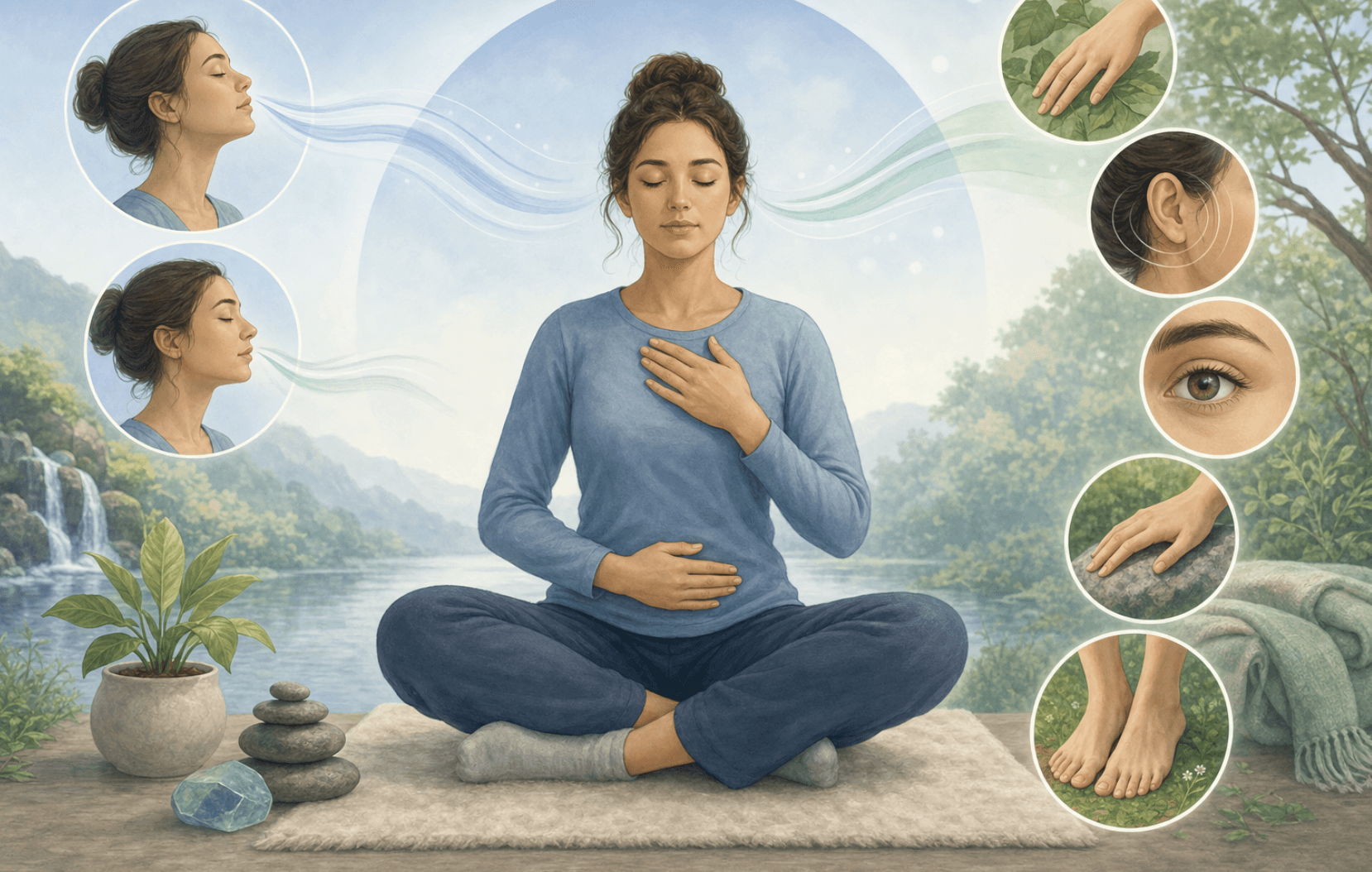
To reduce anxiety quickly, you need to interrupt the “fight or flight” loop in your body. These strategies are helpful for acute spikes, especially if you are managing anxiety when alone.
Box breathing: Inhale, hold, exhale, and hold for four seconds each. This signals safety to your parasympathetic nervous system.
Sensory grounding: Use the “5-4-3-2-1” technique to stop anxiety thoughts. Focusing on external sights and sounds pulls your brain away from internal spirals.
Physical reset: Splash cold water on your face or hold an ice cube. The temperature shift can help lower your heart rate.
These at-home tools help manage symptoms but do not replace full treatment. If you rely on them daily, a psychiatric evaluation can help get at the main driver.
Natural and Complementary Approaches to Anxiety
Many patients use Complementary and Alternative Medicine (CAM) alongside clinical care. While anxiety natural treatments can support well-being, they rarely serve as the only option for more severe disorders.
Physical health: exercise affects cortisol, and nutrition matters. Patients often ask about foods that reduce anxiety fast. While no single food stops a panic attack, steady blood sugar and lower caffeine intake can bring baseline stress down.
Supplements: when looking for the strongest natural anxiety medication or the best herbal remedy for anxiety and depression (such as Ashwagandha), caution is important. “Natural” does not equal safe; many supplements can interact with psychiatric medications.
Body-based therapies: with acupuncture for anxiety, benefits tend to build over time instead of after a single session.
If naturopathic treatments for anxiety and lifestyle changes do not give enough relief, a psychiatric evaluation can provide the missing piece.
Understanding Panic Attacks vs Anxiety Attacks
People often lump panic attacks and anxiety attacks together, but they differ in how they start and how they feel. Anxiety usually builds around specific stressors, while panic attacks are sudden surges of intense fear. Anxiety can be mild or severe and often includes muscle tension and worry. In contrast, panic symptoms can feel more physical and may resemble medical emergencies. Understanding what an anxiety attack feels like can help you recognize the difference.
For panic attack treatment at home, grounding skills like holding ice can help anchor you during an episode. It is not always possible to stop panic attacks forever, but a psychiatric provider can help reduce how often they happen. Treatment for anxiety attacks often includes daily medication for prevention, and a clinician may discuss fast acting medication for panic attacks if that fits your medical and safety profile.
When Anxiety Treatment Isn't Working
It is common to feel discouraged if relief does not happen quickly. Research indicates that about 60% of patients respond fully to their first treatment attempt. Mental health care often involves trial, adjustment, and fine-tuning, not one single fix.
Slow progress can stem from biological factors or co-occurring conditions like ADHD or depression that call for a different plan. If your current approach is not helping enough, a psychiatric provider can review your history and adjust next steps. This might mean changing medications, adjusting doses, or pairing in additional therapeutic tools.
Getting Psychiatric Care for Anxiety
Sometimes, lifestyle changes are not enough to manage symptoms well. A psychiatric evaluation is a next step to understand the biological and psychological factors shaping your anxiety. At Legion Health, board-certified clinicians review your full history and build an evidence-based anxiety treatment plan tailored to your situation.
Clinical care gives you a structured path forward. Your provider may recommend anxiety treatment medication matched to your health profile. Whether that involves SSRIs or other options, the goal is to find the best treatment for anxiety for you. Legion accepts insurance and keeps safety at the center controlled substances are prescribed only when clinically appropriate.
Key takeaways
Evaluations help clarify biological factors and possible comorbidities.
Medication management is a stepwise, evidence-informed process.
Structured follow-ups help your plan evolve as your symptoms change.
If you want help making a plan, you can schedule a psychiatry visit. You can also verify insurance coverage before you book.
Final Thoughts on Treating Anxiety Effectively
Managing anxiety usually takes more than willpower or self-help alone. If your symptoms are interfering with daily life, anxiety treatment with a psychiatric provider can help you understand what is driving them and which options make sense. Relief is possible, but it usually comes from a structured plan that looks at both biological and behavioral factors. The next step is getting an evaluation so you can stop guessing and start making progress.
FAQs
How long does it take for anxiety medication to start working?
Most SSRIs and SNRIs take 4–6 weeks to show their full effect, though some people notice early changes within 2–3 weeks. Your psychiatric provider will schedule follow-ups to monitor how you are doing and adjust the plan if needed.
Can I treat anxiety without taking medication?
Yes. Many people manage anxiety through Cognitive Behavioral Therapy (CBT), lifestyle changes, and stress management techniques. However, if symptoms are severe or interfering with daily life, a psychiatric evaluation can help you decide whether medication could be a useful addition.
What should I do if I'm having a panic attack and I'm alone at home?
Use grounding techniques like box breathing (inhale, hold, exhale, and hold for four seconds each) or the 5-4-3-2-1 sensory method. Splashing cold water on your face or holding an ice cube can also help interrupt the physical response. If panic attacks are frequent, a psychiatric provider can discuss prevention strategies.
How do I know if my anxiety is severe enough to need professional help?
If anxiety is constant, lasts for months, interferes with work or relationships, or leads you to avoid activities you once enjoyed, a psychiatric evaluation can help. Physical symptoms like ongoing sleep disruption, fatigue, or racing thoughts that will not settle are also signs that professional care may be appropriate.
We're honored to support thousands on their journeys. Here's what some have shared:

Really great experience. I got an appointment within a week and the doctor was really nice and professional and they scheduled my labs and everything in a timely manner. I was able to get them done locally and they reviewed them within the next 2 or 3 days with me over video conference. Really good experience!

Legion Health has been a great experience. Treat you like a person and design a custom plan to help your situation.

I’ve had a very positive and satisfying experience with Legion health and my provider, Blessing Ugbor. My needs have been met and my concerns have been addressed in a timely manner. I have been able to make contact easily and talk to real people 😊. I appreciate Legion Health for all the care and support I’ve received so far.

Really great and positive experience must try if you have been thinking about it

My first time using a teledoc. They simplified the process and my Dr. has been great. To say its been a great experience is an understatement. I highly recommend them.

They're great at communicating/meeting your needs
Related articles

Physical Signs of Anxiety You May Be Missing (June 2026)
Signs of Anxiety That Feel Physical June 2026
Panic Attack Symptoms: What to Expect (June 2026)
Panic Attacks Explained | Legion Health June 2026

Hydroxyzine for Anxiety: Dosage & Side Effects (April 2026)
Hydroxyzine Anxiety Dosage Guide | Legion Health