Jan 10, 2026
Anxiety Medication Guide (April 2026)
Written by:

Arthur MacWaters
Co-Founder, Legion Health

TLDR:
SSRIs and SNRIs are first-line treatments for anxiety and require 4–6 weeks of daily use to work.
Benzodiazepines provide rapid relief but carry dependency risks, so they are used for short-term needs.
Side effects differ by medication class and often improve within weeks as your body adjusts.
Legion Health provides virtual psychiatry with fast appointments, insurance coverage, and ongoing medication management.
Choosing an anxiety medication can feel confusing when you're already anxious. The good news is that psychiatric providers use clear frameworks to decide which anxiety medication may fit your situation. This guide covers the main types, how they are usually used, and what side effects to watch for. If this sounds like what you're dealing with, scheduling a psychiatry visit can help clarify your options.
Types of Anxiety Medication
Anxiety medications are often grouped by how they work and whether they are meant for daily maintenance or short-term relief. Psychiatric clinicians look at your symptoms and medical history to choose a class that balances safety and benefit for you.
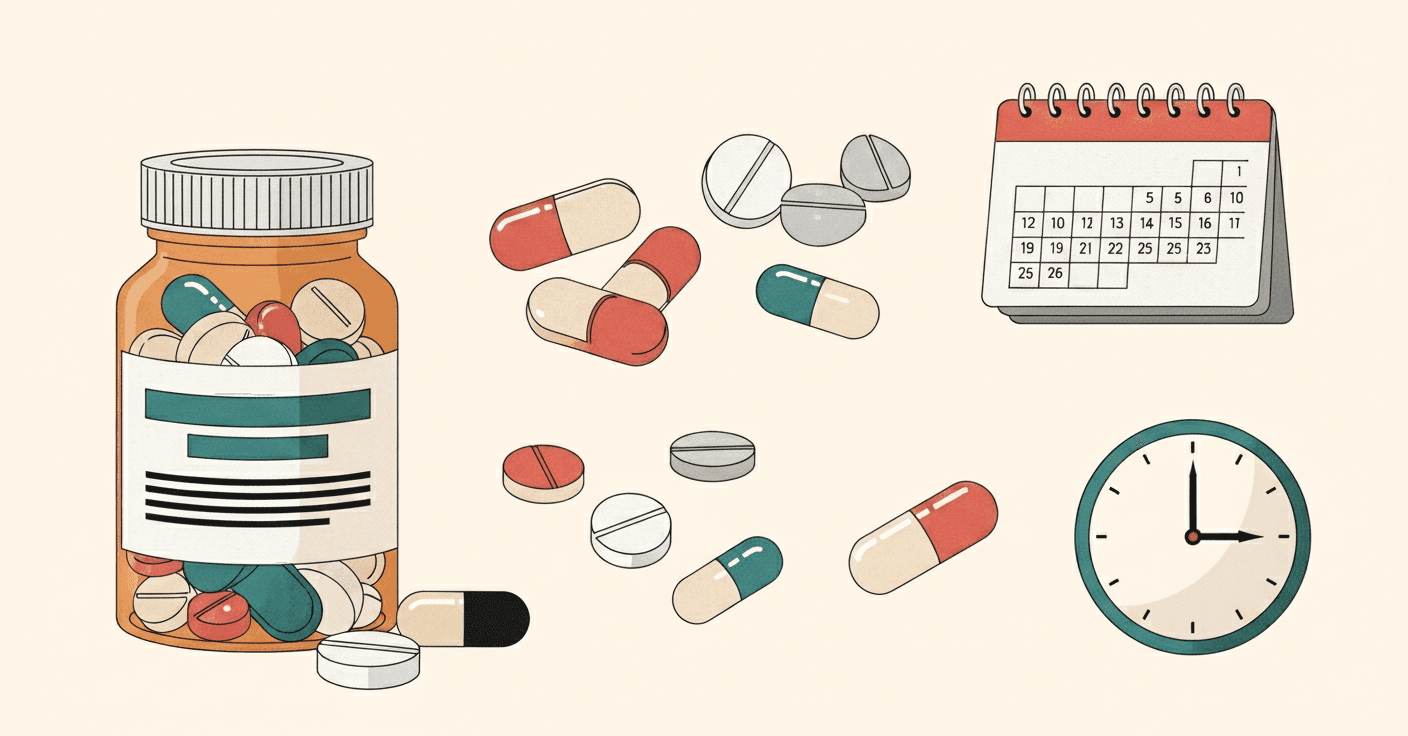
Common categories include:
Selective serotonin reuptake inhibitors (SSRIs), often the first line for ongoing care
Serotonin–norepinephrine reuptake inhibitors (SNRIs), used for both anxiety and depression
Benzodiazepines, usually reserved for acute or short-term relief because of dependency risks
Tricyclic antidepressants (TCAs), an older group used when other options are not helpful enough
Beta-blockers and buspirone, which work differently than standard antidepressants
SSRIs for Anxiety
Selective serotonin reuptake inhibitors (SSRIs) are widely considered a first-line option for generalized anxiety, panic disorder, and social anxiety. Clinicians often choose these medications because they are non-addictive and support long-term symptom control.
Common SSRIs include:
Escitalopram (Lexapro)
Sertraline (Zoloft)
Paroxetine (Paxil)
Fluoxetine (Prozac)
Citalopram (Celexa)
Clinical data backs their use. A systematic review noted a 41% higher response rate among participants taking antidepressants compared with placebo.
SSRIs are not “rescue” medications. They need consistent daily use to work. You may notice early changes within two weeks, but full benefit often appears after four to six weeks.
SNRIs for Anxiety
Serotonin-Norepinephrine Reuptake Inhibitors (SNRIs)
Serotonin–norepinephrine reuptake inhibitors (SNRIs) are another first-line, non-addictive option often used for generalized anxiety disorder (GAD) and panic disorder. Clinicians may suggest this class if someone does not improve enough on SSRIs or has co-occurring depression.
Common SNRIs include:
Venlafaxine (Effexor XR)
Duloxetine (Cymbalta)
Desvenlafaxine (Pristiq)
SSRIs work on serotonin only. SNRIs affect both serotonin and norepinephrine. Norepinephrine plays a role in the body’s stress response and alertness, so SNRIs can help with both emotional and physical symptoms of anxiety.
These medications are for daily maintenance and do not provide immediate relief. Many patients notice change within a few weeks, with full benefit often taking four to six weeks.
Benzodiazepines for Anxiety
Benzodiazepines provide fast relief for severe anxiety symptoms or panic attacks. Unlike daily maintenance medications that build up slowly, these drugs act quickly. Because of the risk of tolerance and physical dependence, they are generally not used as long-term, everyday treatment.
Common benzodiazepines include:
Alprazolam (Xanax)
Lorazepam (Ativan)
Clonazepam (Klonopin)
Diazepam (Valium)
Prescription volume rose by about 67% over almost two decades, so safety protocols around this class are strict. Psychiatric providers typically keep them for acute or short-term situations instead of daily use.
Controlled substances are prescribed only when clinically appropriate and may require added steps, documentation, and monitoring.
Other Medications for Anxiety
Buspirone
Buspirone is approved for generalized anxiety disorder. It is non-habit forming and functions as a daily maintenance option, not a rescue drug.
Beta-Blockers
Originally designed for heart conditions, medications like propranolol are often prescribed off-label for situational anxiety. They help with physical symptoms, such as a racing heart or shaking, often seen in performance or public-speaking anxiety.
Hydroxyzine
This prescription antihistamine offers short-term relief by calming the central nervous system. Because it is not a controlled substance, clinicians may use it for acute symptoms when they want to avoid habit-forming options.
Tricyclic Antidepressants (TCAs)
Older medications like clomipramine may be considered when SSRIs or SNRIs do not help enough. While they can help with anxiety, they are used less often because of a higher side-effect burden.
Common Side Effects of Anxiety Medication
Side effects differ from person to person and by medication class. Many physical symptoms fade over the first few weeks as your body adapts. If side effects linger or affect daily life, your psychiatric provider can discuss changing the dose or medication.
Medication Class | Frequently Reported Side Effects |
|---|---|
SSRIs and SNRIs | Nausea, dry mouth, sleep changes, headache, sexual dysfunction |
Benzodiazepines | Drowsiness, confusion, dizziness, balance issues, memory problems |
Beta-Blockers | Fatigue, cold hands or feet, dizziness, lower blood pressure |
Buspirone | Dizziness, headache, nausea, nervousness |
Do not stop taking medication suddenly without medical guidance, as this can cause withdrawal symptoms. If you notice worsening mood or thoughts of self-harm, call local emergency services or go to the nearest ER right away.
How Long Does Anxiety Medication Take to Work
The timeline for relief depends on the type of medication and your own biology. Your psychiatric provider will outline what to expect.
Daily maintenance medications
Options like SSRIs and SNRIs take time to build in your system. You may see early changes in sleep or appetite in the first two weeks, but full benefit often takes four to six weeks of steady use. Mild side effects can appear before anxiety symptoms start to ease.
Rapid-onset medications
Medications for acute symptoms often start working within 30 to 60 minutes. These are used for short-term or situational relief. Because they do not treat the root driver of anxiety, clinicians usually pair them with a long-term maintenance plan instead of using them alone.
Medication Management and Follow-Up Care
Finding the right anxiety medication often takes some adjustment. Medication management visits give your psychiatric provider a chance to see how you are doing and keep treatment safe and purposeful.
During follow-up visits, your clinician typically focuses on:
Symptom changes, to see whether the medication is helping your daily life
Side effects and tolerability, to see if the plan is realistic for you over time
Dose changes, to find the lowest effective amount
Safety checks, including interactions with other medications and physical health updates
When Anxiety Medication Might Be Right for You
Medication is often considered when anxiety moves from occasional stress to a barrier in everyday life. If symptoms keep you from sleeping, working, or maintaining relationships, a psychiatric provider may suggest medication to help steady your baseline.
For many patients, medication lowers symptom intensity enough to make therapy and lifestyle changes more doable. Your clinician looks at how long symptoms have been present and how distressing they are, then suggests next steps. The aim is not to remove all stress, but to reduce anxiety enough for you to function and feel more like yourself.
How Legion Health Approaches Anxiety Treatment

Legion Health provides virtual psychiatric care that is evidence-based, accessible, and covered by insurance. Board-certified psychiatric providers look at the full picture of your mental health, including overlapping conditions like depression or ADHD. The focus is thoughtful medication management that supports stability over time.
The clinic also manages logistics so care feels smoother:
Fast access: Appointments are often available within days, not months.
Insurance-friendly: Major plans are accepted to keep out-of-pocket costs predictable.
Ongoing support: Treatment plans are adjusted over time so they keep fitting your needs.
If anxiety is getting in the way of your life, a psychiatric evaluation can help you make a clear plan.
Final Thoughts on Managing Anxiety With Medication
Anxiety medication can bring symptoms down to a level where you can function, rest, and reconnect with what matters to you. The process usually involves some trial and adjustment, but a psychiatric provider can guide you with clear communication and safety checks. If anxiety is interfering with daily life, scheduling an evaluation is a reasonable next step.
FAQs
What's the difference between SSRIs and SNRIs for anxiety?
SSRIs raise serotonin levels in the brain, while SNRIs affect both serotonin and norepinephrine. Both are non-addictive first-line options for anxiety, and your psychiatric provider will suggest one based on your symptoms and whether you also have depression or other conditions.
How long do I need to take anxiety medication before it starts working?
Daily maintenance medications like SSRIs and SNRIs usually take four to six weeks to reach full effect, though some people notice early changes within about two weeks. Benzodiazepines act within 30 to 60 minutes but are reserved for short-term or acute relief because of dependence risks.
Can I stop taking anxiety medication if I feel better?
Stopping suddenly without medical input can cause withdrawal symptoms. Your psychiatric provider can help you decide whether tapering is appropriate and set a gradual schedule if it is time to come off medication.
Are benzodiazepines safe for long-term anxiety treatment?
Benzodiazepines are generally not used as long-term daily treatment because of tolerance and dependence risks. Psychiatric providers usually keep them for acute situations and lean on non-habit-forming options like SSRIs or SNRIs for ongoing care.
What should I do if my anxiety medication causes side effects?
Reach out to your psychiatric provider if side effects persist or interfere with your life. Many side effects settle in the first few weeks, but your clinician can discuss dose changes or switching to a different medication if needed.
We're honored to support thousands on their journeys. Here's what some have shared:

Really great experience. I got an appointment within a week and the doctor was really nice and professional and they scheduled my labs and everything in a timely manner. I was able to get them done locally and they reviewed them within the next 2 or 3 days with me over video conference. Really good experience!

Legion Health has been a great experience. Treat you like a person and design a custom plan to help your situation.

I’ve had a very positive and satisfying experience with Legion health and my provider, Blessing Ugbor. My needs have been met and my concerns have been addressed in a timely manner. I have been able to make contact easily and talk to real people 😊. I appreciate Legion Health for all the care and support I’ve received so far.

Really great and positive experience must try if you have been thinking about it

My first time using a teledoc. They simplified the process and my Dr. has been great. To say its been a great experience is an understatement. I highly recommend them.

They're great at communicating/meeting your needs
Related articles

Physical Signs of Anxiety You May Be Missing (June 2026)
Signs of Anxiety That Feel Physical June 2026

Panic Attack Symptoms: What to Expect (June 2026)
Panic Attacks Explained | Legion Health June 2026

Hydroxyzine for Anxiety: Dosage & Side Effects (April 2026)
Hydroxyzine Anxiety Dosage Guide | Legion Health