Apr 15, 2026
Legion Health vs Done: Which is Better for ADHD Treatment? (April 2026)
Written by:

Arthur MacWaters
Co-Founder, Legion Health

TLDR:
Legion Health accepts major Texas insurance with specialist copays vs Done's $1,200+ annual fees
FDA-cleared QbCheck testing is included at no cost for an objective ADHD diagnosis
Done's founder was convicted of federal charges for unlawful stimulant distribution
Legion Health treats ADHD with co-occurring anxiety, depression, and other conditions
Legion Health serves Texas adults with psychiatric care led by licensed clinicians
If you're trying to decide between Done and Legion Health for ADHD treatment, start with the numbers. Done's subscription costs $79 per month with a $299 upfront fee, and insurance is never an option. That's over $1,200 annually before you pay for medications. Legion Health accepts major Texas commercial insurance, so most patients pay a specialist copay per visit instead of flat monthly fees. The diagnostic process is where the two services really split. Done assesses ADHD through clinical interviews and self-reported symptoms, with no objective testing involved. Legion Health includes FDA-cleared QbCheck testing in every ADHD evaluation at no additional cost, and your care covers co-occurring conditions like anxiety and depression within the same treatment plan. If you're in Texas with solid insurance coverage, those differences add up fast.
What is Done?
Done is a subscription-based telehealth service focused on ADHD treatment for adults. The model is straightforward: pay $299 upfront, then $79 per month for ongoing medication management, all handled through virtual appointments with prescribers.
A few things stand out about how Done operates:
No insurance is accepted, meaning every patient pays out of pocket regardless of their coverage.
Visits happen entirely online, with no in-person requirements at any point.
The service is limited to ADHD medication management, not broader psychiatric care.
If you have solid insurance coverage, the subscription costs can add up quickly. At $79 per month, you're looking at nearly $1,000 annually, before the initial fee.
For anyone managing ADHD alongside other conditions like anxiety or depression, Done's narrow scope may leave gaps in care. A service built solely around medication management has no clear path for dealing with co-occurring concerns.
That said, for someone who prefers a simple, predictable cash-pay structure and only needs ADHD medication management, the model has a clear appeal.
What is Legion Health?
Legion Health is a virtual psychiatry clinic built for Texas adults who need real psychiatric care.
Care covers ADHD, anxiety, depression, and co-occurring conditions. Every patient works with a board-certified psychiatric provider, and treatment plans are built on a comprehensive evaluation instead of a one-size-fits-all approach. Your care is led by clinicians, not software.
A few things that set Legion Health apart:
We accept major Texas commercial insurance, so most patients pay a typical specialist copay instead of full out-of-pocket costs
ADHD evaluations include FDA-cleared QbCheck testing at no additional cost
Co-occurring conditions are treated together, not in isolation from one another
New patient appointments are typically available within days, not weeks
That last point matters. Over 160 million Americans live in areas with mental health provider shortages, meaning wait times at traditional clinics can stretch for weeks or months. Legion Health works to close that gap for Texans.
If you're in Texas and want psychiatric care that goes beyond medication management alone, Legion Health may be a strong fit.
Insurance Coverage and Payment Structure
The gap between these two services becomes clearest when you look at what you actually pay.
Done charges $299 upfront, then $79 per month going forward. That fee covers appointments and medication management, but not the medications themselves. Insurance is never an option, so your existing mental health benefits don't factor in at all. If you have employer-sponsored coverage, you're paying twice: once through your premiums, once through Done's subscription.
Legion Health accepts major Texas commercial insurance plans. For most patients, that means paying a typical specialist copay per visit, often under $30. If your coverage changes or lapses, a self-pay option is available so your care doesn't get interrupted mid-treatment.
Done | Legion Health | |
|---|---|---|
Upfront cost | $299 | Varies by plan |
Monthly cost | $79/month | Copay per visit |
Insurance accepted | No | Yes (major TX plans) |
Self-pay option | Yes | Yes |
Medications included | No | No |
Over a full year, Done's fees alone exceed $1,200 before any medication costs, and without objective testing. For patients with solid insurance coverage, that difference is hard to ignore.
ADHD Diagnostic Testing and Evaluation
How a provider approaches diagnosis matters as much as how they treat.
Done relies on clinical interviews and self-reporting to assess ADHD. There's no objective testing, which means the diagnosis leans entirely on what a patient describes during a brief consultation. For straightforward cases, that may be enough. But anxiety and depression can mimic ADHD symptoms closely, and without data to separate them, the risk of an incomplete or inaccurate assessment goes up.
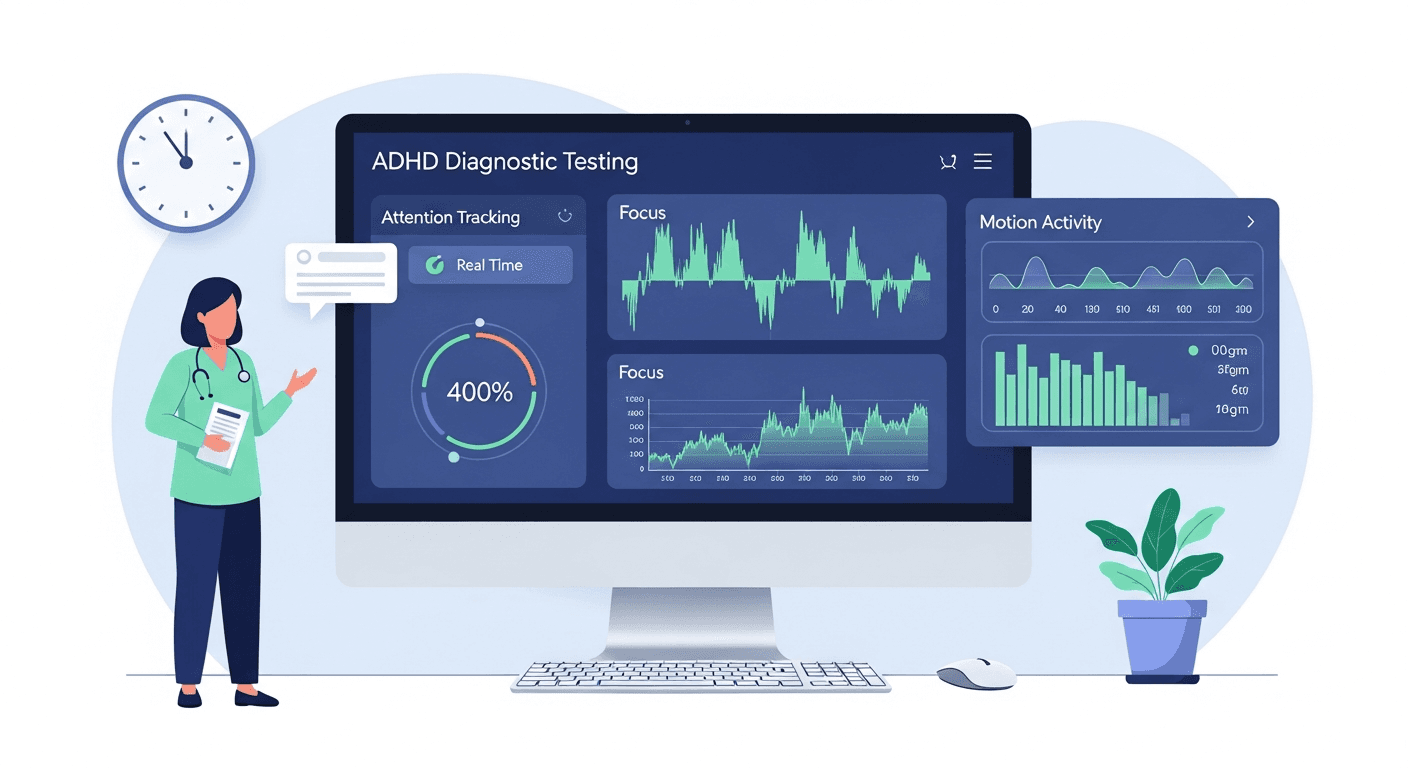
Legion Health takes a different approach. Every ADHD evaluation includes FDA-cleared QbCheck testing at no extra cost. QbCheck uses a computerized task paired with motion tracking to measure attention, impulsivity, and activity levels objectively. The result is clinical data, not a symptom checklist.
"QbCheck provides objective and unbiased decision-making support when diagnosing and treating ADHD in children, adolescents, and adults." - QbTech
That data serves two purposes: it helps clinicians separate ADHD from overlapping conditions at the outset, and it creates a measurable baseline for tracking how well treatment is working over time. If symptoms improve, you can see it in the numbers.
Regulatory Scrutiny and Clinical Oversight
Done's regulatory history goes beyond policy disagreements. The company's founder and CEO were arrested and charged with unlawfully distributing controlled substances and healthcare fraud. According to the U.S. Department of Justice, Done Global unlawfully distributed ADHD medications without medical need, using a a subscription model and targeted advertising to find patients searching for drugs. A federal official described it as one of the most egregious telehealth abuses the agency had seen. A jury convicted both the founder and a former top doctor of conspiring to distribute stimulants.
The allegations pointed to auto-refill features, brief clinical encounters, and limited prescriber oversight as structural problems, where subscription revenue appeared to take precedence over appropriate care. Similar concerns have surfaced with other telehealth platforms like Cerebral.
At Legion Health, prescribing decisions follow comprehensive evaluations, objective testing, and individualized dosing based on clinical judgment and safety monitoring. Controlled substances are prescribed only when clinically appropriate, and ongoing follow-up is driven by clinical need. Your care is led by licensed clinicians, not software.
Treatment Scope and Co-Occurring Conditions
Done treats ADHD only. Bipolar disorder, complex PTSD, schizophrenia, and related conditions fall outside its scope, so if your diagnosis evolves or a co-occurring condition surfaces, you start over with a new provider. This limited scope is similar to Brightside Health, which also focuses narrowly on specific conditions.
That matters because ADHD rarely travels alone. Research shows that comorbid conditions increase disease burden, prolong illness, and reduce treatment response.
What Legion Health treats
Legion Health's clinical scope covers ADHD alongside a range of co-occurring psychiatric conditions, all within a single ongoing care relationship:
Anxiety disorders, where symptoms frequently overlap with and complicate ADHD presentations (providers like Talkiatry handle these as well, though with different approaches to care)
Depression, which commonly co-occurs with ADHD and can shift how treatment is sequenced
Bipolar disorder, PTSD, and OCD, conditions that require careful diagnostic separation from ADHD before a treatment plan is built
Because a licensed psychiatric clinician reviews your full history from the start, your treatment can account for the complete picture, not a single diagnosis in isolation.
Why Legion Health is the Better Choice

Done serves a clear use case: cash-pay patients who need ADHD medication management and prefer a flat subscription over dealing with insurance. If that describes you and you live outside Texas, Done may be worth considering.
For most patients in Texas, Legion Health is the stronger choice across almost every dimension. You can start by taking a free online ADHD screening to better understand your symptoms before your evaluation.
The cost gap is hard to ignore. Done's fees exceed $1,200 per year before medications, with no insurance accepted. Most Legion Health patients pay a specialist copay per visit, often under $30, through major Texas commercial insurance. Self-pay is also available for patients whose coverage changes mid-treatment.
The diagnostic approach is another area where the two services differ meaningfully. Legion Health includes FDA-cleared QbCheck testing in every ADHD evaluation at no extra charge. That objective data gives your clinician a measurable baseline and reduces the risk of misdiagnosis over time. No other major telehealth provider includes this as standard.
Clinical scope matters too. If your needs extend beyond ADHD, Legion Health's care covers anxiety, depression, bipolar disorder, PTSD, and OCD within one ongoing care relationship. You won't need to start over with a new provider if your clinical picture changes.
Final Thoughts on ADHD Care Models
The choice between Legion Health vs Done depends on where you live, what you need treated, and how you prefer to pay for care. For Texas adults with insurance who want evidence-based psychiatric treatment that covers more than ADHD alone, Legion Health offers better value and clinical rigor. Done serves a narrower use case well, but most patients benefit from objective testing, lower out-of-pocket costs, and comprehensive care. If that sounds like what you need, schedule an evaluation with Legion Health to get started.
FAQs
How should I decide between Done and Legion Health for my ADHD care?
Start with your location and insurance status. If you're a Texas adult with commercial insurance, Legion Health will likely save you over $1,000 annually compared to Done's subscription model while providing broader psychiatric care. If you're outside Texas and prefer a simple cash-pay structure for ADHD medication management only, Done may be worth considering.
What's the main difference in how Done and Legion Health diagnose ADHD?
Done relies on clinical interviews and self-reported symptoms, while Legion Health includes FDA-cleared QbCheck testing at no additional cost in every ADHD evaluation. QbCheck measures attention, impulsivity, and activity objectively through computerized tasks, creating baseline data that helps separate ADHD from conditions like anxiety or depression that can look similar.
Who is Legion Health best for compared to Done?
Legion Health is built for Texas adults who need care for ADHD alongside co-occurring conditions like anxiety, depression, or PTSD, and who want to use their insurance coverage instead of paying out of pocket. Done serves patients who only need ADHD medication management and prefer a flat monthly subscription without insurance involvement.
Can I switch to Legion Health if my clinical needs change while using Done?
Yes, but you'll need to start with a new evaluation since Done only treats ADHD and doesn't handle co-occurring psychiatric conditions. Legion Health accepts new patients typically within days, and the comprehensive evaluation includes objective testing and a full psychiatric assessment to build a treatment plan that covers your complete clinical picture.
What happens with my care at Legion Health if my insurance coverage changes?
Your care continues without interruption. Legion Health offers a cash-pay option for patients whose insurance lapses or changes, so you can maintain the same provider relationship and treatment plan regardless of your coverage status.
We're honored to support thousands on their journeys. Here's what some have shared:

Really great experience. I got an appointment within a week and the doctor was really nice and professional and they scheduled my labs and everything in a timely manner. I was able to get them done locally and they reviewed them within the next 2 or 3 days with me over video conference. Really good experience!

Legion Health has been a great experience. Treat you like a person and design a custom plan to help your situation.

I’ve had a very positive and satisfying experience with Legion health and my provider, Blessing Ugbor. My needs have been met and my concerns have been addressed in a timely manner. I have been able to make contact easily and talk to real people 😊. I appreciate Legion Health for all the care and support I’ve received so far.

Really great and positive experience must try if you have been thinking about it

My first time using a teledoc. They simplified the process and my Dr. has been great. To say its been a great experience is an understatement. I highly recommend them.

They're great at communicating/meeting your needs
Related articles

Legion Health vs One Behavioral: Which is Better? (May 2026)
Legion Health vs One Behavioral (May 2026)
One Behavioral Reviews, Pricing, and Alternatives (May 2026)
One Behavioral Reviews & Alternatives May 2026

Being Health Reviews, Pricing, and Alternatives (May 2026)
Being Health Reviews & Alternatives May 2026