Mar 13, 2026
Online Psychiatry for LGBTQ Individuals in Texas (March 2026)
Written by:

Yash M. Patel
Co-Founder & CEO, Legion Health

TLDR:
LGBTQ people experience an estimated two and a half times higher rates of depression and anxiety than heterosexual people, and transgender people face nearly four times higher rates than cisgender people.
Around 8 percent of LGBTQ people and more than a quarter of transgender people report being denied needed health care, and geographic and policy barriers add extra strain.
Online psychiatry provides HIPAA-protected access to affirming care from home, which can matter if local options feel limited or unsafe.
Legion Health accepts most major Texas insurance plans and offers virtual psychiatry with licensed clinicians, so many visits are billed at predictable copay-level costs.
Finding affirming mental health care in Texas can feel complicated, especially if you are LGBTQ and have already had to educate providers about your identity. When you look into online psychiatry for LGBTQ individuals in Texas, you are usually hoping to meet with someone who understands your context from the start. Virtual visits let you schedule around your life, talk from wherever you have privacy, and work with a clinician who treats your chosen family and relationship structure as part of your support system versus something you need to explain or defend.
TLDR:
LGBTQ people experience an estimated two and a half times higher rates of depression and anxiety than heterosexual people, and transgender people face nearly four times higher rates than cisgender people.
Around 8 percent of LGBTQ people and more than a quarter of transgender people report being denied needed health care, and geographic and policy barriers add extra strain.
Online psychiatry provides HIPAA-protected access to affirming care from home, which can matter if local options feel limited or unsafe.
Legion Health accepts most major Texas insurance plans and offers virtual psychiatry with licensed clinicians, so many visits are billed at predictable copay-level costs.
Why LGBTQ Individuals Face Higher Mental Health Care Needs
LGBTQ individuals face 2.5x higher rates compared with heterosexual individuals. Transgender individuals face nearly 4x higher rates than cisgender individuals of experiencing a mental health condition.

These disparities stem from minority stress, discrimination, family rejection, and social stigma. When you're managing both your internal experience and external hostility, the mental health load becomes heavier.
Affirming psychiatric care can help you sort through what's situational stress versus what needs clinical attention, without making you explain your identity at every step.
Access Barriers LGBTQ Texans Face in Mental Health Care
Finding affirming mental health care in Texas comes with specific obstacles. 8% of LGBTQ and 27% of transgender individuals report being denied needed health care outright.
Geographic access is part of the problem. Many Texas counties have few mental health providers, and even fewer who are trained in LGBTQ-affirming care.
Fear of discrimination keeps people from seeking care in the first place. If you've had a provider misgender you, refuse to understand your relationship structure, or frame your identity as part of the problem, going back feels risky.
Policy barriers add another layer. Some insurance plans exclude transition-related care or mental health services tied to gender dysphoria. When coverage is unclear or actively hostile, the administrative burden can keep you from starting treatment.
What Makes Psychiatric Care Affirming
Affirming care means your clinician understands how minority stress affects mental health and can separate gender dysphoria from other mood conditions without dismissing either. You should be able to use your correct name and pronouns without needing to correct them. Your provider should ask about your support system, chosen family, and safety in ways that respect your actual life.
Affirming care also means your clinician can coordinate with other providers if you're on hormone therapy or considering transition-related care. The difference isn't bedside manner. It's whether your provider has the clinical knowledge to treat you accurately without making your identity the explanation for every symptom.
How Online Psychiatry Works for LGBTQ Care
Online psychiatry visits are conducted via secure video. You schedule an appointment, complete intake forms ahead of time, and meet with a licensed psychiatric clinician from wherever you have privacy and internet access.
During your first visit, your clinician assesses your symptoms, reviews your history, and discusses treatment options. If medication is appropriate, they can prescribe and send it to your pharmacy the same day. Follow-ups are scheduled based on what you need - weekly at first if you're starting a new medication, then less often once things stabilize.
Between visits, you can message your clinician through a secure portal if side effects or questions come up.
Telepsychiatry is comparable to face-to-face services in terms of clinical assessment reliability and treatment outcomes. For LGBTQ individuals in areas with few affirming providers, that access can make the difference between getting help and continuing to wait.
Privacy and Safety Considerations in Virtual Care
Online psychiatric visits are protected by HIPAA. Your visit content, messages, and records are encrypted and can't be accessed without your permission.
Billing usually appears as the clinic name on your insurance statement or credit card, not as a specific mental health service. If you're on a family plan and need to know how it will show up, ask the billing team before your first visit.
For the visit itself, you need a private space where you won't be overheard. A parked car with headphones, a bedroom with a locked door, or a library study room can work. If you don't have privacy at home, scheduling when others are out or finding a trusted friend's space can help. If your living situation feels unsafe and someone monitors your internet activity or billing, online care may not reduce risk as much as you need.
If your living situation feels unsafe and someone monitors your internet activity or billing, online care may not reduce risk the way you need it to. You may want to wait until you have more control over your environment, or look into clinics that offer sliding-scale in-person visits you can pay for directly.
Insurance Coverage and Cost for Online Psychiatry
Most insurance plans cover telepsychiatry the same way they cover in-person psychiatric visits. Your copay or coinsurance applies as it would for any mental health appointment.
If you're paying out of pocket, initial psychiatric evaluations commonly cost between 200 and 400 dollars. Follow-up visits typically cost $100-$200.
Before scheduling, check whether the clinic is in-network with your plan and what your copay for a mental health visit is. Some plans require prior authorization for psychiatric care, which can delay your first appointment.
Legion Health works with most major insurance plans in Texas. Visit costs are often closer to a typical copay instead of the full out-of-pocket rate. You can see whether Legion Health is a fit at https://app.legionhealth.com/portal/join/fit.
Finding the Right Online Psychiatric Provider
Check that providers are licensed in Texas and ask about their experience working with LGBTQ patients. Look for clinics that include pronoun fields in intake forms and treat identity as part of your context, not a diagnosis.
Red flags include providers who require you to be out to family before starting care, suggest conversion-focused approaches, or frame gender-affirming care as something to discourage instead of support thoughtfully when clinically appropriate.
Evaluation Criteria | Affirming Care Indicators | Red Flags to Avoid |
|---|---|---|
Provider Training and Experience | Clinicians with documented experience working with LGBTQ patients, an understanding of minority stress, and the ability to separate gender dysphoria from other mood conditions | Providers who lack LGBTQ-specific training, suggest conversion-focused approaches, or frame identity as the root cause of all symptoms |
Intake and Documentation | Forms include pronoun fields and chosen name options, treat identity as part of your context versus a diagnosis, and use inclusive language about relationships and family structures | Forms with only binary gender options, no space for pronouns or chosen names, assumptions about family structure, or relationship types |
Treatment Approach | Clinician asks about support systems, including chosen family, discusses safety contextually, coordinates with other providers on hormone therapy or transition care when relevant | Requires you to be out to your biological family before starting care, dismisses chosen family as legitimate support, and refuses to coordinate with gender-affirming care providers |
Clinical Boundaries | Provider uses correct name and pronouns without needing reminders, validates minority stress impact, and separates situational stress from clinical conditions requiring medication | Repeatedly misgenders you, makes you explain your identity each visit, frames your relationships or identity as inherently problematic |
Privacy and Billing | HIPAA-protected visits with encrypted communication, clear explanation of how services appear on insurance statements, options for discreet billing if needed | Unclear privacy policies, no transparency about billing appearance, and inability to accommodate safety concerns about shared insurance plans |
How Legion Health Supports LGBTQ Texans
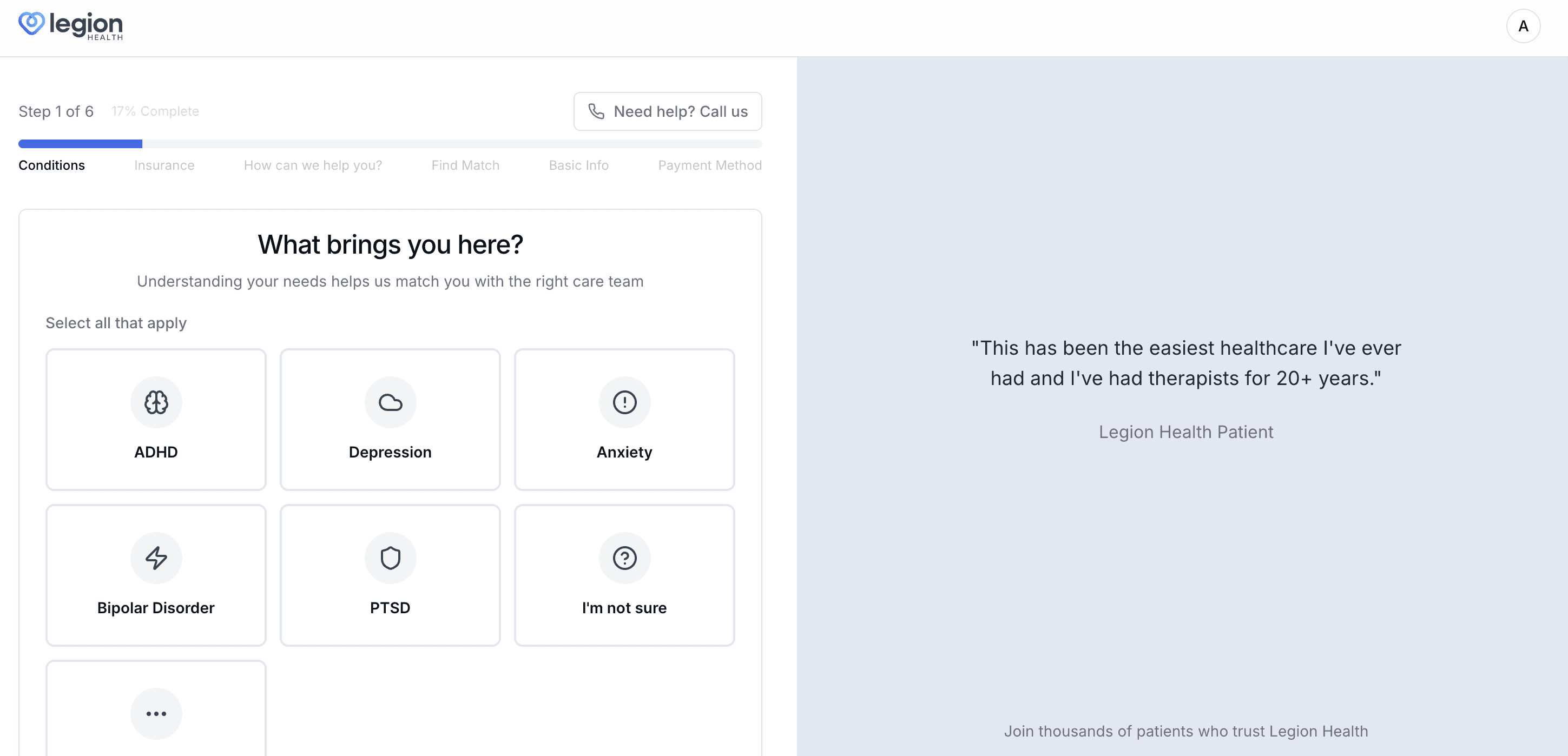
We work with most major insurance plans in Texas, which helps keep visit costs closer to a typical copay instead of the full out-of-pocket rate. Our clinicians take time to build confidence in a diagnosis before prescribing controlled substances - sorting through whether what you're experiencing is ADHD, anxiety, sleep deprivation, or something else entirely before moving to medication. The goal is to reduce the structural friction that keeps people from getting care.
Final Thoughts on Virtual Psychiatric Care for LGBTQ Individuals
The right care setup reduces the friction that keeps people from getting help in the first place. With online psychiatry for LGBTQ individuals, you can see a provider who treats your identity as part of your context without making it the focus of every session. If access barriers have been the main obstacle to your treatment, virtual care can help you move forward.
If you’d like support from a licensed psychiatric clinician, you can see whether Legion Health is a fit and schedule your first visit.
FAQs
How do online psychiatry visits work if I don't have privacy at home?
You need a private space where you won't be overheard - a parked car with headphones, a bedroom with a locked door, or a library study room can all work. If you don't have privacy at home, try scheduling when others are out or ask a trusted friend if you can use their space.
What should I look for when choosing an online psychiatric provider in Texas?
Check that providers are licensed in Texas and ask about their experience working with LGBTQ patients. Look for clinics that include pronoun fields in intake forms and treat your identity as part of your context, not a diagnosis - red flags include providers who suggest conversion-focused approaches or require you to be out to family before starting care.
Will my insurance cover online psychiatry the same way it covers in-person visits?
Most insurance plans cover telepsychiatry the same way they cover in-person psychiatric visits, so your copay or coinsurance applies as it would for any mental health appointment. Before scheduling, check whether the clinic is in-network with your plan and what your mental health visit copay is - some plans require prior authorization for psychiatric care, which can delay your first appointment.
How will the visit show up on my insurance statement or credit card?
Billing usually appears as the clinic name on your insurance statement or credit card, not as a specific mental health service. If you're on a family plan and need to know how it will show up, ask the billing team before your first visit.
How legion health Can Help You
If you’re in perimenopause or menopause and want guidance from clinicians who specialize in women’s midlife health, book a virtual visit with Legion Health today.
Hormonal changes are at the root of many symptoms women experience in the years before and after their periods stop.
Our trained menopause specialists help you connect the dots and guide you toward safe, effective solutions.
Whether you need personalized care or a prescription-based treatment plan to manage symptoms—including brain fog, hot flashes, sleep issues, mood swings, and weight gain—we’ve got you covered. Learn more here.
We're honored to support thousands on their journeys. Here's what some have shared: