Jan 30, 2026
Legion Health vs Mindpath Health: Which is Better? (January 2026)
Written by:

Arthur MacWaters
Co-Founder, Legion Health

TLDR:
Legion often books visits in days and includes free objective ADHD testing as part of its pathway.
Mindpath uses a large provider network where new-patient waits of 2–4 weeks are common.
Legion handles insurance centrally for its whole clinical team; Mindpath coverage depends on each provider and location.
Legion’s ADHD pathway adds standardized safety checks and computerized testing to support diagnosis.
Legion Health is a virtual psychiatry clinic for adults in Texas that works with all major commercial insurance plans.
You are comparing Legion Health and Mindpath Health because you want psychiatric care that is practical: fast appointments, clear insurance coverage, and evaluations that feel careful, not rushed. Both offer online psychiatry, but they differ in how long you wait, how predictable billing is, and how structured their ADHD pathways are. This guide walks through those differences so you can choose the clinic that fits what you need.
What Is Mindpath Health?
Mindpath Health is a mental health company that offers psychiatry and therapy across multiple states through a large network of clinicians. Its model focuses on connecting patients with individual providers who deliver care either in person, via telehealth, or both, depending on the location.
Because it operates in many regions with many independent clinicians, the experience can vary. Some clinics may have short waits and broad insurance coverage, while others may feel more like traditional private practices with longer waits and less predictable benefits.
What Is Legion Health?
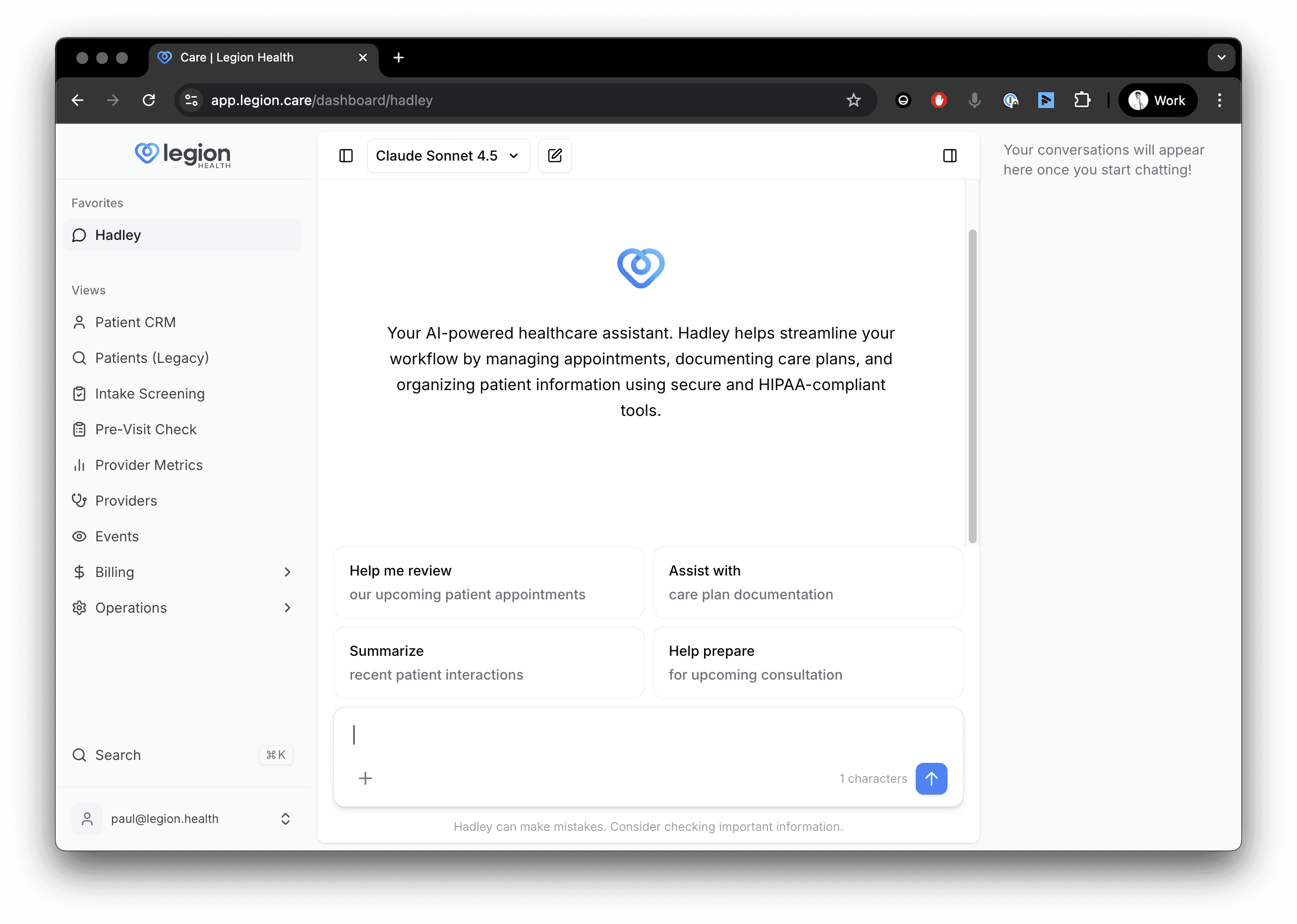
Legion Health is a Texas-based virtual psychiatry clinic focused on adults who want insurance-covered care without long delays. This telehealth-first model aligns with broader adoption patterns, as 68.2% of psychiatrists now use videoconferencing or audio-only telehealth for more than 20% of their weekly visits, making psychiatry the specialty most reliant on telehealth.
Legion’s clinicians provide online evaluations, medication management, and ongoing follow-up for conditions such as ADHD, anxiety, depression, and bipolar disorder.
The clinic hires its psychiatric providers directly and uses a single, centralized system for scheduling and insurance. That helps keep wait times short and costs more predictable. For ADHD, Legion also includes computerized objective testing (QbCheck) at no extra charge as part of its evaluation process.
Appointment Access and Scheduling
Getting help fast matters, especially if you are dealing with new symptoms or a needed medication adjustment.
Mindpath Health: Variable wait times
Mindpath Health’s large multi-state network can make it easier to find a provider in some areas, but waits often resemble traditional outpatient psychiatry. Many patients report needing about two to four weeks to see a clinician for an intake, depending on their state and local provider availability.
Mindpath also offers Mindpath On Demand, a same-day online option that is currently limited to patients in North Carolina. If you live elsewhere, you are more likely to follow the standard scheduling window, which may be frustrating if you need faster medication review or new-start care.
Legion Health: Speed and direct access
Legion Health’s care model is built around quick access for Texas adults. Across its service pages, new patients can often book within days instead of weeks, with some locations offering same-week or even next-day openings.
Because all clinicians work inside a single virtual clinic with shared scheduling, you are not calling around to individual offices. You choose a time that works, complete short intake forms, and meet with a psychiatric clinician via telehealth from home.
Insurance Coverage and Cost Transparency
Insurance details can make or break a care decision. Surprise bills or unclear benefits are a common pain point in psychiatry.
Feature | Legion Health | Mindpath Health |
|---|---|---|
Appointment Wait Time | Same-day to 2-3 days for initial appointment | 2-4 weeks typical wait time; same-day available only in North Carolina via Mindpath On Demand |
Insurance Network | Centralized billing; in-network with all major commercial plans for entire clinical team | Accepts major plans (Aetna, Anthem, BCBS, Humana, UnitedHealthcare), but coverage varies by individual provider and location |
Cost Transparency | Clear cost estimates provided upfront; centralized billing eliminates provider-to-provider variation | Must verify coverage with specific provider; out-of-pocket costs can be difficult to predict before visit |
ADHD Diagnostic Process | Standardized protocol with free computerized objective testing, structured risk screening, and physical health coordination | Traditional provider-dependent approach using self-report questionnaires (e.g., ASRS); evaluation depth varies by clinician |
Clinical Team Structure | Direct clinical team with consistent protocols and quality standards | Large network of independent providers across multiple states with variable practice styles |
Best For | Adults needing fast access, insurance predictability, structured ADHD evaluations with objective data, and consistent care protocols | Patients preferring in-person options, wanting to choose from many providers, or located in North Carolina for same-day service |
Mindpath Health: Coverage varies by location
Mindpath Health lists many major insurers, often including Aetna, Anthem, BlueCross BlueShield, Humana, and UnitedHealthcare/Optum. Because it operates across multiple states with many independent clinicians, whether your specific plan is in-network can depend on your location and chosen provider.
This setup means one office may accept your plan while another does not. As a result, it can be hard to know exact out-of-pocket costs until you confirm coverage with the specific clinician or call your insurance plan directly.
Legion Health: Centralized billing and clear estimates
Legion takes a different approach. The clinic is in-network with all major commercial insurance plans in Texas, and that network status applies across its full clinical team. This centralized insurance model aligns with broader workplace benefits trends, as 73% of employers now offer access to virtual mental health care.
Key points for costs at Legion:
One network status: If Legion accepts your plan, they accept it for all of their psychiatric clinicians.
Central billing: You do not have to worry about one specific provider being out-of-network while others are in-network.
Upfront expectations: Legion focuses on clear, upfront cost expectations so most patients can plan around a standard copay or coinsurance instead of surprise balances.
ADHD Care and Diagnostic Rigor
ADHD can overlap with anxiety, trauma, sleep disorders, and mood conditions, so a quick or one-dimensional evaluation can miss important details. An estimated 15.5 million U.S. adults had an ADHD diagnosis in 2023, with 46% having used telehealth services for ADHD-related care, making structured virtual evaluation pathways increasingly important.
Mindpath Health: Traditional, Provider-Dependent Care
Mindpath Health typically handles ADHD inside a general psychiatry framework. Clinicians commonly use self-report tools like the ASRS and other questionnaires to collect symptom information and may combine that with clinical interviews and rating scales.
Because Mindpath functions as a large network of individual providers, the ADHD experience can vary from one clinician to another:
Some clinicians may spread the assessment across several visits; others may reach a diagnosis more quickly.
The depth of screening for comorbid issues such as anxiety, depression, or substance use depends on each clinician’s style.
Most of the information comes from your self-report, which is standard in psychiatry but does not add objective data.
Legion Health: Objective Data and Standardized Safety
Legion Health uses a defined ADHD pathway built to support both accuracy and safety. In addition to a detailed psychiatric interview, Legion includes QbCheck, an FDA-cleared computerized ADHD test, at no extra charge for patients in its ADHD program.
Legion’s ADHD approach typically includes:
Objective testing: QbCheck measures attention, impulsivity, and motor activity to give your clinician data alongside your story.
Safety screening: Clinicians review medical history, substance use, and other risk factors before planning treatment.
Medical coordination: When needed, clinicians coordinate with primary care to review vitals or lab work before starting or adjusting medications.
Follow-up structure: Ongoing visits are scheduled to track how you respond to treatment, adjust doses, and monitor side effects.
Regarding medication, Legion is clear that controlled substances are prescribed only when clinically appropriate and with added safeguards. If stimulant medication is not a good fit, your clinician can discuss other evidence-based options for ADHD or overlapping conditions.
Why Legion Health is the Better Choice
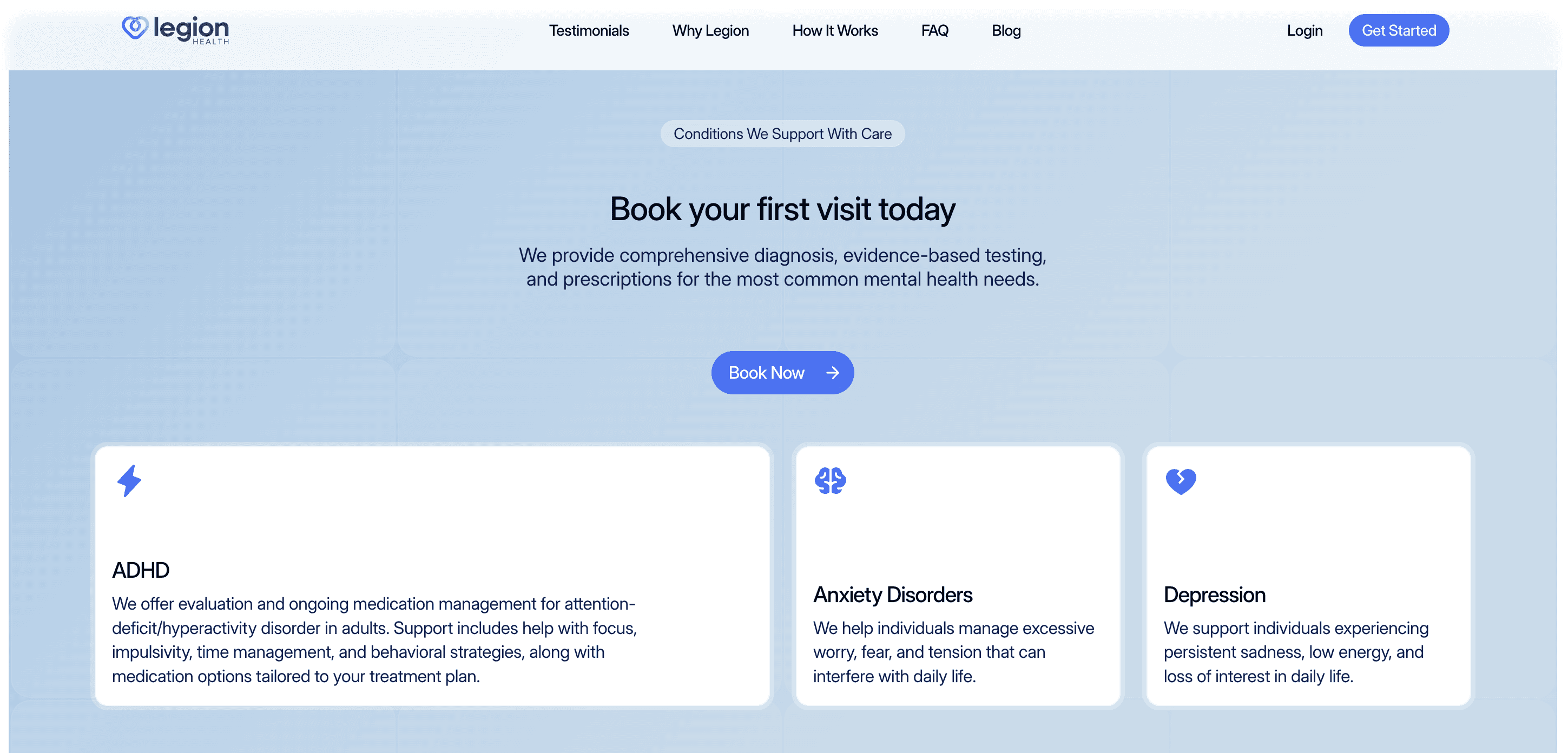
For many adults, the biggest needs are fast access, predictable insurance coverage, and a thoughtful ADHD process that does not skip steps. Legion Health is designed around these priorities:
Fast access: Initial appointments are often available within days, with telehealth visits that fit around work and family schedules.
Insurance-friendly: Legion is in-network with all major commercial plans in Texas, and that coverage applies to all of its psychiatric clinicians.
Structured ADHD care: The pathway combines clinical interviews, QbCheck data, and safety-focused prescribing practices.
Multi-condition support: Legion’s clinicians commonly treat ADHD alongside anxiety, depression, and related conditions in the same clinic.
If you want psychiatric care that uses your insurance, avoids long waits, and treats ADHD with more than just a checklist, Legion Health is often a strong fit. If you prefer in-person visits in non-Texas states or want a very broad national network, Mindpath Health may be worth considering.
If you want a clearer plan for ADHD or other psychiatric concerns and prefer clinician-led, insurance-based care, you can see if Legion Health is a fit and schedule your first visit.
Final thoughts on the Legion Health and Mindpath Health comparison
Choosing between Legion Health and Mindpath Health comes down to what matters most for your situation. Legion focuses on fast, virtual psychiatric care for Texas adults, with standardized ADHD evaluations that include objective testing and predictable insurance coverage across its entire clinical team. Mindpath offers a large, multi-state network with both telehealth and in-person options, but with more variation in wait times and coverage from one provider to another.
If you want to move from research to action, booking a psychiatric evaluation is a practical next step. At Legion Health, you can check your insurance, choose a time, and meet with a licensed psychiatric clinician online, often within days.
FAQs
How should I decide between Legion Health and Mindpath Health for my psychiatric care?
If you value fast access, a single in-network clinic for all clinicians, and a structured ADHD pathway with objective testing, Legion Health is built around those needs. If you want in-person options in multiple states and are comfortable with more variation in wait times and insurance details, Mindpath Health may be a better match.
What's the main difference in how these two clinics handle ADHD evaluations?
Legion Health uses a defined ADHD protocol that includes QbCheck computerized testing at no extra cost, safety screening, and medical coordination when needed. Mindpath Health generally follows standard outpatient psychiatry practices where tools, depth, and visit structure depend on each individual clinician.
Who is Legion Health best suited for?
Legion works well for Texas adults who want insurance-covered psychiatric care without long waits, people seeking ADHD evaluations with objective data, and patients who are managing ADHD alongside anxiety or depression and prefer consistent follow-up in one virtual clinic.
Who might prefer Mindpath Health instead?
Mindpath Health may make more sense if you live in a state where Legion does not operate, prefer in-person appointments, want to choose among many practice styles, or live in North Carolina and can access their same-day on-demand service.
What should I know about switching from another provider to either of these clinics?
Both organizations can request records from prior clinicians, but the workflow differs. At Legion Health, record coordination is handled centrally during intake so your new clinician can review your history more easily. At Mindpath Health, processes can vary by provider, so you may need to confirm how record transfer works when you book.
How legion health Can Help You
If you’re in perimenopause or menopause and want guidance from clinicians who specialize in women’s midlife health, book a virtual visit with Legion Health today.
Hormonal changes are at the root of many symptoms women experience in the years before and after their periods stop.
Our trained menopause specialists help you connect the dots and guide you toward safe, effective solutions.
Whether you need personalized care or a prescription-based treatment plan to manage symptoms—including brain fog, hot flashes, sleep issues, mood swings, and weight gain—we’ve got you covered. Learn more here.
We're honored to support thousands on their journeys. Here's what some have shared:
Related articles

Legion Health vs One Behavioral: Which is Better? (May 2026)
Legion Health vs One Behavioral (May 2026)
One Behavioral Reviews, Pricing, and Alternatives (May 2026)
One Behavioral Reviews & Alternatives May 2026

Being Health Reviews, Pricing, and Alternatives (May 2026)
Being Health Reviews & Alternatives May 2026